How You Can Use AI for Behavioral Analytics on Websites
In today’s increasingly digitized world, understanding user behavior is crucial for business success, which makes AI-powered behavioral analytics an invaluable tool. This technology offers deep insights into how users interact with websites and can even forecast their interests.
In this article, we’ll answer questions such as ‘What is behavioral analytics?’ and ‘How can AI transform raw data into valuable information?’. We’ll also explain how to implement this tech into AI development services when building custom products that will take your business to the next level.
What Is Behavioral Analytics and How Does It Work?
Behavioral analytics is essential for understanding user behavior and preferences. It encompasses analyzing multiple factors, from click and scroll tracking to other forms of navigation patterns across websites. Equipped with advanced-level tools and algorithms, an organization can capture exhaustive data on how users interact with their digital platforms to learn almost everything about them.
AI behavior analytics identifies business trends, pinpoints loopholes, and offers customized user experiences. Businesses use the collected information to build a more interactive, functional, and engaging digital space. Understanding what occurs typically throughout a user’s journey assists companies in designing their websites. For example, you can ensure critical information is easy to find, and potential friction points are avoided. This significantly enhances user satisfaction, which can also lead to higher conversion rates.
Behavioral analytics can also be used to segment audiences by their interaction patterns. For instance, it could divide users into groups based on their activities. Therefore, you can develop marketing strategies that appeal to a particular demographic. Such strategies include showing targeted promotions or recommendations to frequent product page visitors who never buy. This way, you help advance them one step further toward a buying decision. This personalization enriches the user experience and strengthens brand loyalty because customers feel valued.
Additionally, behavioral AI is applied in predictive modeling. Through the analysis of historical data, an organization will be able to estimate future behaviors and trends, which may outcompete others. This proactive approach helps a company adapt to strategies in real-time to meet customers’ changing needs. As technology evolves, adding Artificial Intelligence and Machine Learning to behavioral analytics will continue to increase the precision and effectiveness of those insights, making it an indispensable tool for modern businesses.
How Does AI Collect and Process Data for Consumer Behavior Analytics?
AI helps amass and process vast volumes of data about users. The algorithms automatically gather information from several sources and analyze user interactions in real-time. Information types vary, including user clicks, page visits, session duration, and dwell time. These AI systems use advanced techniques, such as Natural Language Processing, to make sense of textual data and provide deeper insights.
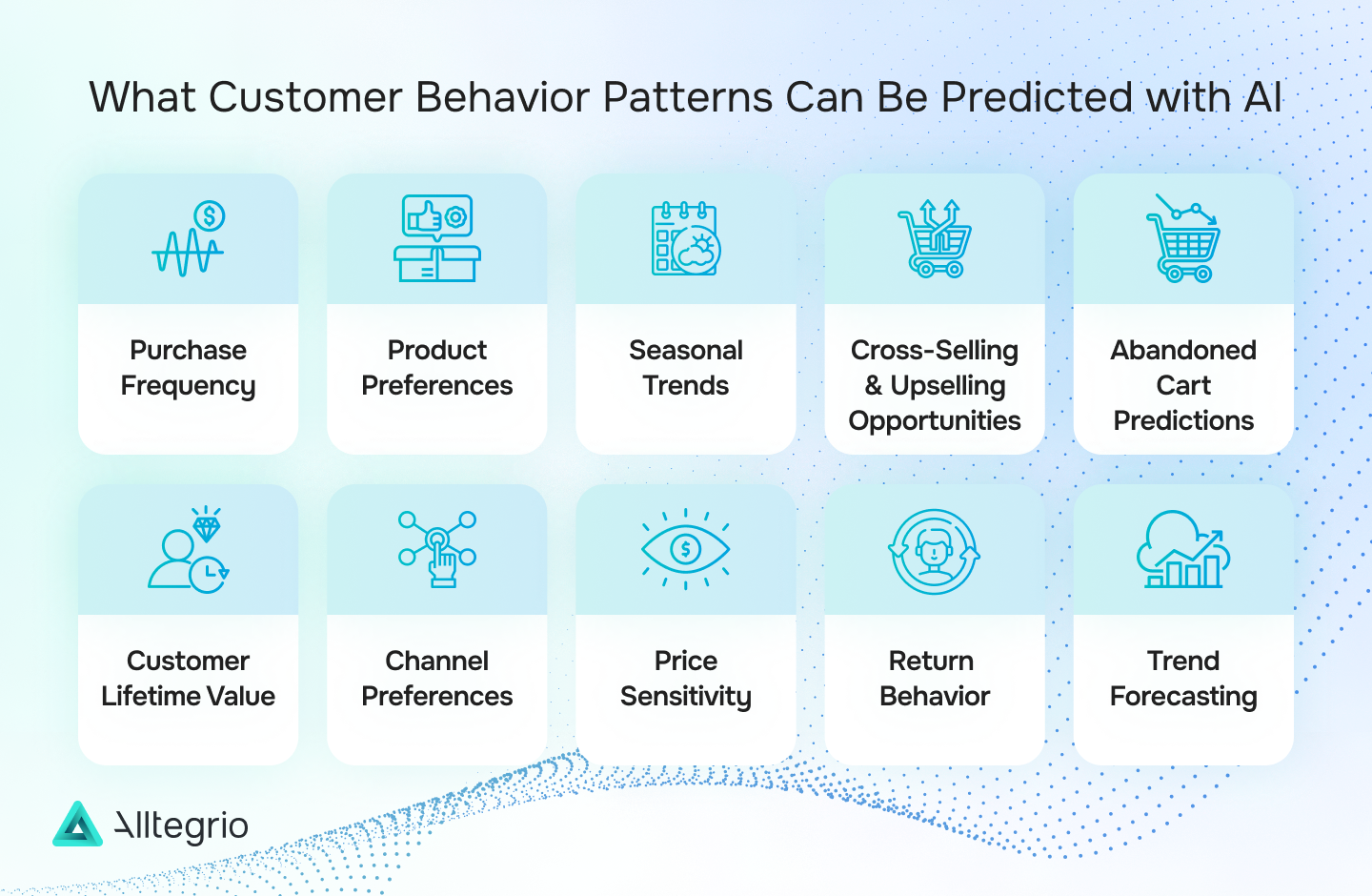
Moreover, AI uses Machine Learning models to interpret consumer behavior and delineate patterns or trends that otherwise may not be evident. These behavioral AI models use historical data to predict future behavior, allowing firms to adapt or design an efficient marketing strategy. For example, if you had a high shopping cart abandonment rate, AI would check what variables were common for them and recommend specific interventions. These could be personalized discounts or reminders to complete the sale.
Besides behavioral data, AI integrates demographic and psychographic factors to provide comprehensive consumer profiling. This multi-dimensional approach lets firms segment audiences more precisely and create personalized marketing campaigns. Understanding who and what motivates consumers, not just what they do, helps companies achieve greater customer engagement and loyalty. Consequently, with every evolution in AI technology, this capability will only progress.
Book a FREE Consultation
Set up a free consultation today to learn how your business can harness the power of AI behavior analytics.
What Algorithms Are Used for Behavioral AI Analysis?
A few algorithms play an important role in behavioral AI analysis.
K-means clustering This algorithm clusters similar user behavior into segments. It’s highly valuable for creating messages and offerings for specific groups through targeted marketing efforts. It can enhance engagement and conversion rates significantly. Also, you can use clustering to separate frequent buyers from casual shoppers. Therefore, you will be able to send personalized promotions that resonate with each group.
Decision trees and regression analysis These algorithms can predict user actions based on historical trends. They analyze patterns and relationships within data to enable forecasting of future behaviors with some assurance. Machine Learning development provides methods to enhance the models continuously. Using this behavioral analytics allows companies to change their approach very fast. The increase in data over time leads to refinement in the predictions. Therefore, the insights grow progressively more sophisticated and improve customer service.
Another significant technology involved in behavioral analytics software is Neural Networks, especially Deep Learning models. Such complicated architecture can work with unstructured data, like text and images, to identify hidden patterns in user behavior.
For example, social media platforms use Deep Learning to analyze the kind of content users like interacting with and what other users they interact with. These insights enable them to recommend personalized feeds that keep users on their site longer.
Meanwhile, Reinforcement Learning is a growing field within behavioral AI. It includes various algorithms that learn actions through trial and error. Therefore, it works very well in dynamic environments such as online gaming or real-time bidding on advertising.
Another technology used for understanding user sentiment in AI behavioral analysis is Natural Language Processing. By analyzing textual data from customer reviews, social media posts, or chat interactions, NLP algorithms capture the public sentiment and emotional tone toward specific products or services.
Tools and Technologies for Implementing Behavioral Analytics
Several tools and technologies support the implementation of AI behavior analysis in businesses. General solutions like Google Analytics can perform basic tracking, while more specialized services like Mixpanel support user segmentation and behavioral tracking.
Specialized AI-based tools, such as Hotjar and Crazy Egg, offer heatmaps and session recordings that allow businesses to dive deeper into user interaction details.
How Can AI Behavior Analysis Optimize Your Marketing Budget?
AI behavior analysis has become a game-changer in optimizing marketing budgets. It provides insight into which channels work best for an organization, allowing resources to be allocated more appropriately.
AI tools track in real-time which campaigns are pulling better and targeting what audiences. The data-driven approach ensures marketing dollars are invested exactly where they yield the biggest returns.
How AI Behavior Analysis Helps Identifying Preferences and Forecasting
AI-powered behavior analytics empowers organizations to understand consumer preferences by tracing trends in user behavior. Analysis of search queries and navigation routes can help businesses develop offerings that meet user interests.
The other key advantage of AI behavior analysis is forecasting. Companies can use predictive models to foretell what will happen and stay ahead of the competition. Data Science consulting services can help you understand potential implementations and limits of these forecasts.
How to Use Behavioral Analytics to Improve Website UI/UX Design
When done right, behavioral analytics can enhance UI/UX website design. Examining how users interact with design elements is valuable, and it helps companies optimize their layouts, color schemes, and navigation flows.
AI tools provide insight into what takes up the most time with users and where drop-offs occur. Data like that is priceless when making informed design decisions to facilitate better user experiences.
How to Use Consumer Behavior Analytics for Personalization
Personalization through consumer behavior analytics can drive engagement and customer satisfaction. Businesses build a sense of connection and relevance by personalizing content and recommendations through individual user behavior.
For instance, by looking back at past purchases and even browsing history, online retailers can show products that resonate with certain users, allowing them to increase their chances of converting them into buyers.
The Role of Behavioral AI in Tracking User Interactions
AI behavior analytics plays a major role in tracking users’ interactions by constantly monitoring user behavior on the website. It provides an opportunity to understand how their users navigate and use the content on their site in real-time
Machine Learning enables AI systems to auto-adjust themselves according to changing user behavior and preference, hence keeping the businesses aligned with audience expectations.
Benefits of Using Behavioral Analytics
Behavioral analytics enable a set of business advantages. The foremost among these is that businesses can be more informed in their decision-making by understanding customer behavior in-depth.
Improved customer engagement through more personalized experiences
Increased conversion rates by finding and removing friction points in the user’s journey
Data-driven insights that empower product development and marketing strategies
Challenges of Using Behavior Analytics Software
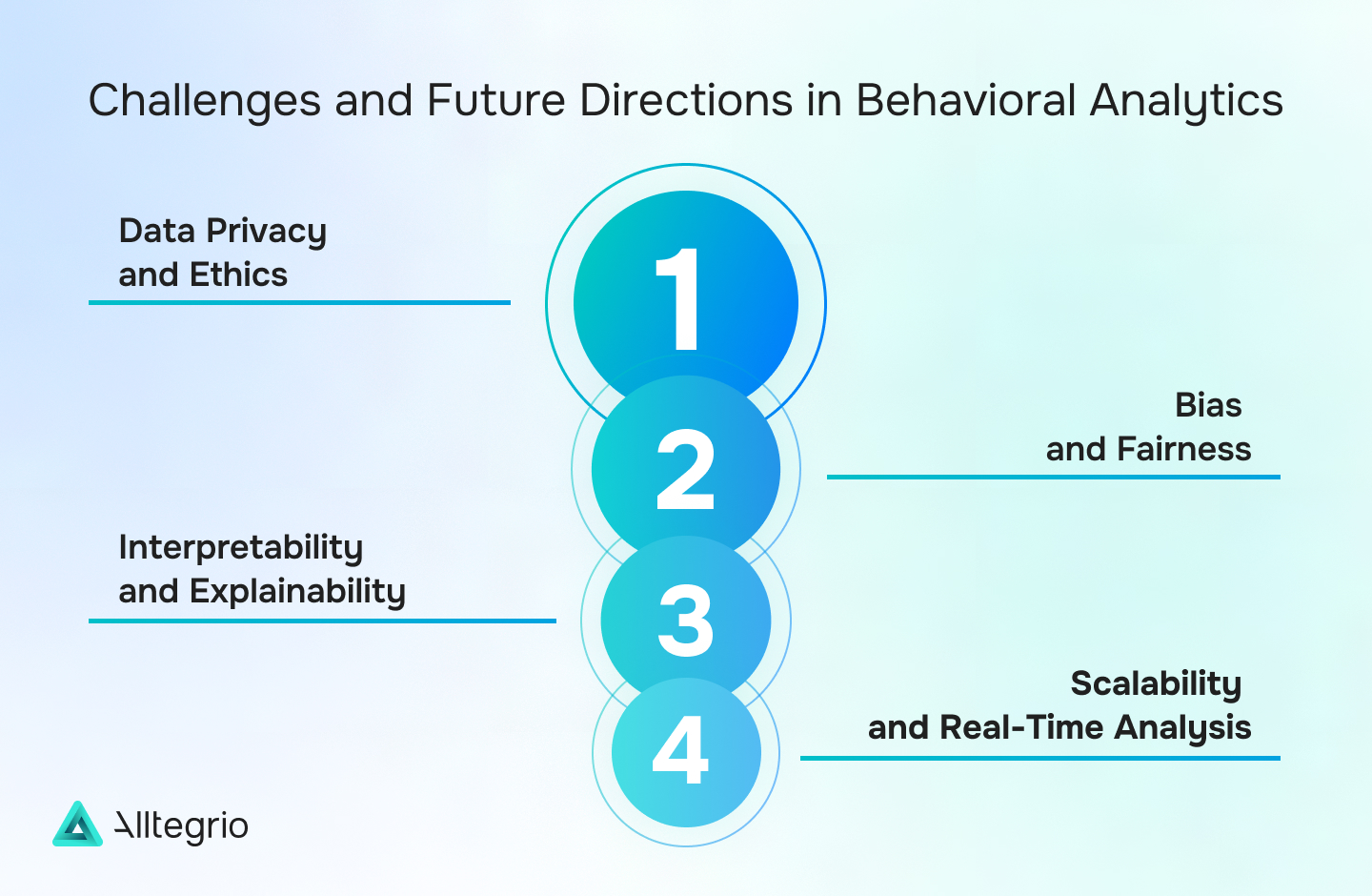
Of course, using behavior analytics software also has some challenges. Businesses must balance compliance with often convoluted regulations while maintaining user trust. As organizations increasingly rely on behavioral analytics, the issue of privacy assumes critical dimensions. In other words, with regulations such as GDPR and CCPA in place that protect user rights over data collection and usage, businesses will have to make sure they comply with them.
It helps build trust with them because transparency of data practices and safeguarding of private information are two important points that guarantee effective analytics with a good user experience. The amount of data collected is vast, and in-depth analytics requires expertise. Companies must invest in talent and technology to effectively extract value from these tools.
Successful Examples of Consumer Behavior Analytics
Many different organizations apply consumer behavior analytics to speed up business growth. For example, Netflix relies on granular data around viewer behavior to drive personalized content recommendations. This personalization is vital to user retention.
In another example we all know and use regularly, Amazon processes user activity for personalized product recommendations. This leads to higher sales and greater customer satisfaction.
Bottom Line: When to Invest in AI Behavioral Analytics
Investing in AI behavioral analytics makes complete sense for any business that wants to improve user engagement and conversions. Data-driven strategies and user experience will make a difference for companies looking to thrive in today’s competitive landscapes.
At Alltegrio, we will start by assessing what analytics you have available currently. Next, we will do thorough research and determine what ROI might be possible from robust AI solutions. Finally, we will develop behavior analytics software that will be custom-tailored to meet your unique business’ needs.










'%3E%3C/rect%3E%3Cpath d='M21.0079 11.1156L21.6244 11.1841C24.4986 11.5025 26.6656 13.982 26.6656 16.9507V24.7908C26.6656 26.3373 27.4992 27.7759 28.8412 28.5458C28.957 28.6124 29.0564 28.7011 29.1345 28.8053H12.8746C12.9528 28.7011 13.0521 28.6124 13.1679 28.5458C14.51 27.7768 15.3436 26.3383 15.3436 24.7908V16.808C15.3436 13.9145 17.5095 11.4967 20.3827 11.1831L21.007 11.1146M21.0041 8.5C20.5902 8.5 20.2554 8.83575 20.2554 9.24869V10.0147C16.8323 10.3881 14.1684 13.2854 14.1684 16.808V24.7908C14.1684 25.9206 13.5635 26.9635 12.5832 27.526C11.9137 27.91 11.5007 28.622 11.5007 29.3939C11.5007 29.718 11.7632 29.9805 12.0873 29.9805H29.9199C30.244 29.9805 30.5065 29.718 30.5065 29.3939C30.5065 28.622 30.0935 27.91 29.424 27.526C28.4437 26.9645 27.8388 25.9206 27.8388 24.7908V16.9507C27.8388 13.4138 25.2048 10.3987 21.7518 10.0157V9.24869C21.7518 8.83479 21.417 8.5 21.0041 8.5Z' fill='white'%3E%3C/path%3E%3Cpath d='M21.0041 8.5C20.5902 8.5 20.2554 8.83575 20.2554 9.24869V10.0147C16.8323 10.3881 14.1684 13.2854 14.1684 16.808V24.7908C14.1684 25.9206 13.5635 26.9635 12.5832 27.526C11.9137 27.91 11.5007 28.622 11.5007 29.3939C11.5007 29.718 11.7632 29.9805 12.0873 29.9805H29.9199C30.244 29.9805 30.5065 29.718 30.5065 29.3939C30.5065 28.622 30.0935 27.91 29.424 27.526C28.4437 26.9645 27.8388 25.9206 27.8388 24.7908V16.9507C27.8388 13.4138 25.2048 10.3987 21.7518 10.0157V9.24869C21.7518 8.83479 21.417 8.5 21.0041 8.5Z' fill='white'%3E%3C/path%3E%3Cpath d='M23.582 31.1199H18.426C18.5698 32.4166 19.6687 33.4267 21.004 33.4267C22.3393 33.4267 23.4382 32.4175 23.582 31.1199Z' fill='white'%3E%3C/path%3E%3Cdefs%3E%3ClinearGradient id='paint0_linear_1536_57632' x1='0' y1='0' x2='42' y2='42' gradientUnits='userSpaceOnUse'%3E%3Cstop stop-color='%2300CBBF'%3E%3C/stop%3E%3Cstop offset='1' stop-color='%23007DFE'%3E%3C/stop%3E%3C/linearGradient%3E%3C/defs%3E%3C/svg%3E)