The integration of Artificial Intelligence (AI) into the supply chain optimization process is creating a transformational change within the logistics industry. AI technologies enhance efficiency, reduce costs, and permit better decision-making in real-time. In this post, we will explore different dimensions of the application of AI in logistics and the tangible benefits it can offer businesses.
How AI Is Used in Logistics for Supply Chain Optimization
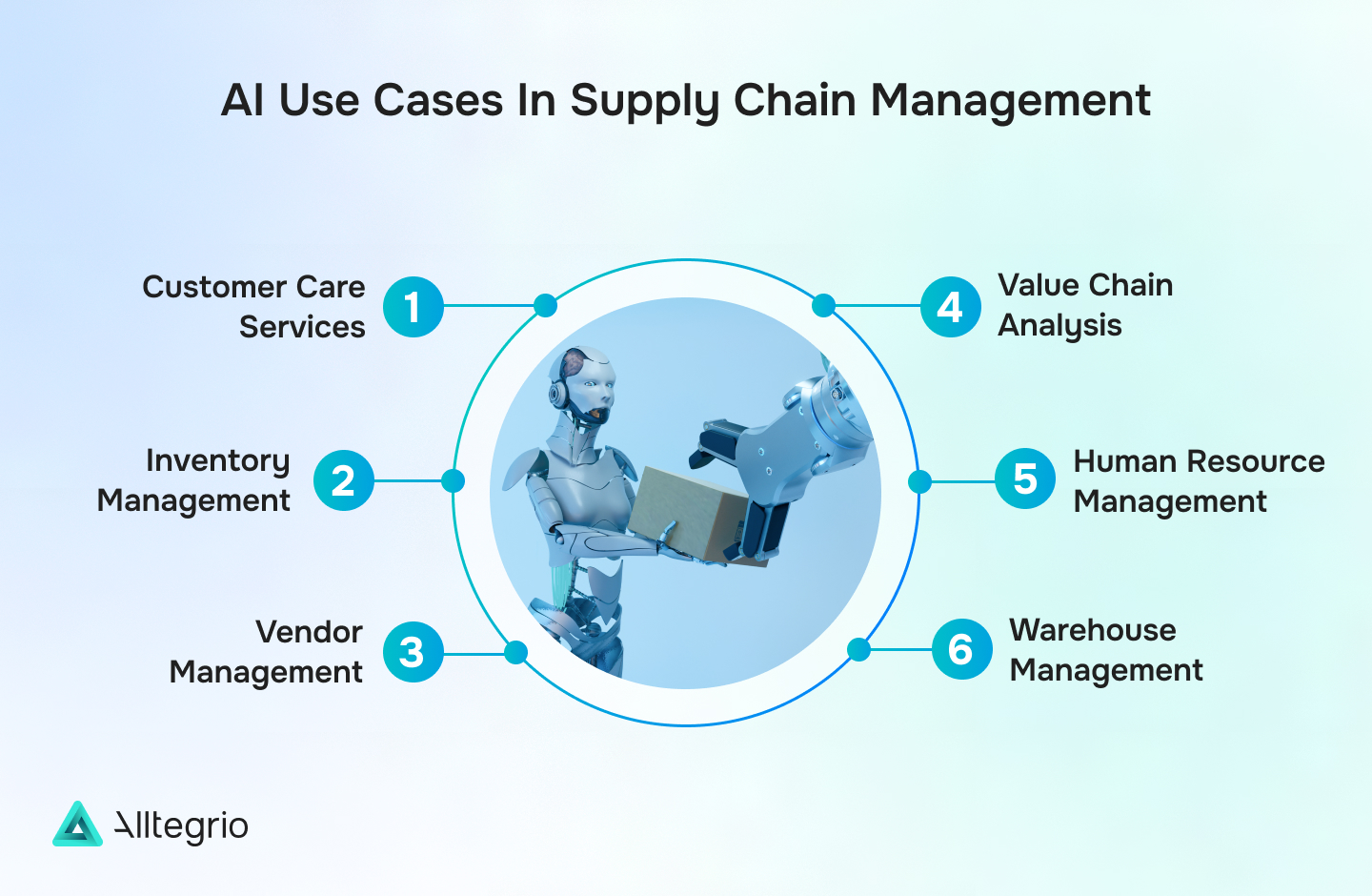
AI is making significant inroads into the logistics industry by optimizing the different phases of the supply chain. From demand forecasting to inventory management and routing transport, AI systems analyze large data sets to drive immediate improvements. Machine Learning algorithms analyze historical data to predict future demand accurately. Therefore, they help businesses make informed decisions. This predictive capability can help your company not only maintain optimum inventory levels but also avoid overstocking or stockouts that result in lost sales and dissatisfied customers.
Furthermore, AI tools can identify inefficiencies in transportation logistics, optimizing routes based on traffic conditions and external factors such as weather. By leveraging real-time data, AI can suggest alternative routes that save time and fuel, which is crucial for companies looking to reduce operational costs and carbon footprints. Integrating AI in supply chain and logistics helps minimize delays and maximize operational efficiency, offering businesses a competitive edge. AI can also improve warehouse operations by automating the sorting and packing processes. This speeds up the orders and helps in maintaining accuracy regarding inventory.
AI-driven analytics takes it a notch further by giving insights into customer behavior and preferences. Therefore, they enable businesses to implement logistics strategies according to factual insights.
Companies can predict peak seasons for certain merchandise by analyzing purchasing patterns, so they proactively position their supply chains for maximum performance. That responsiveness boosts customer satisfaction and strengthens relations with vendors and other partners. It’s because everyone along the chain can work in tandem towards common objectives. As this tech continues to improve, integrating AI in logistics promises to unlock even more inventive solutions. The result is making the supply chain more agile and resilient.
How to Implement AI for Supply Chain Management?
AI in supply chain and logistics can automate multiple processes and mundane tasks to free up human resources for higher-value tasks. Some examples of such tasks are:
Processing orders
Managing invoices
Tracking shipments
Reordering supplies
All these operations managed by AI supply chain optimization tools would require much less time than if a person were to perform them. This increases productivity while reducing the possibility of human error, leading to highly accurate and reliable operations.
With AI in logistics, different stakeholders in the supply chain can collaborate much better on a single platform for information sharing and communication. This interconnectivity facilitates smoother operations, ensuring all parties are on the same page regarding stock levels, order status, and when to expect delivery. Using AI-driven analytics allows companies to extract insights into their supply chain performance, pinpointing bottlenecks, and inefficient processes not previously detected. This enables the company to make informed decisions that improve productivity and responsiveness to market demand.
Moreover, using AI for supply chain optimization can remarkably enhance demand forecasting. AI analyzes historical sales data, market trends, and even social media sentiment to do this. This enables companies to anticipate fluctuations in demand with increased precision and adjust production schedules and inventory accordingly. For example, during peak seasons, AI may help retailers optimize their inventory-to-sales balance without overusing resources. The integration of Machine Learning algorithms enables companies to continuously update their forecasting models to maintain agility and competitiveness in a dynamic market.
As AI continues to evolve, its role in supply chain management will likely expand, driving innovation and creating new opportunities for businesses to thrive in a complex global landscape.
What Role Will Autonomous Vehicles and Drones Play in Supply Chain Optimization?
Autonomous vehicles and drones are technologies people rarely consider when talking about AI in logistics and transportation. However, they are already revolutionizing the logistics landscape. Drone delivery businesses, like ZipLine, already exist. These technologies promise faster delivery times and reduced labor costs.
Drones, in particular, can navigate urban environments quickly, bypassing traffic and delivering packages to hard-to-reach areas. This capability not only enhances convenience for consumers but also opens up new possibilities for businesses, allowing them to expand their service areas without additional infrastructure. For example, areas in the countryside that had previously struggled with receiving deliveries in a timely manner may now enjoy significant improvements in service.
Furthermore, autonomous trucks can move goods more efficiently for longer distances. These vehicles rely on AI to navigate and optimize routes in real time, reducing the chances of human error and making their usage safer.
The use of AI in logistics could significantly cut overhead costs while improving service delivery. In addition, the application of autonomous vehicles reduces environmental degradation by optimizing fuel consumption and subsequent emissions. Capable of analyzing traffic patterns and weather conditions, these vehicles can take the most eco-friendly routes to further help with a greener logistics model. As corporate entities start to focus more on sustainability, adoption of such technologies would most likely play a critical role in meeting corporate social responsibility goals.
Another important factor is that companies can get real-time information on what is transpiring throughout their supply chain thanks to IoT sensors and advanced tracking systems. This information provides insight into predicting demand fluctuations, better inventory management, and improving warehouse operations. Consequently, companies will be able to respond quicker not only to changes in the market but also to operational efficiency.
Apply AI in Logistics to achieve real growth fast
Learn how AI can enhance your logistics business, reduce costs, and help prevent expensive repairs.
How to Use AI in Logistics and Transportation to Save Costs?
Companies can capitalize on implementing AI in supply chain and logistics to reduce costs in this rather expensive business. Predictive Analytics consulting can help identify the most cost-effective shipping routes and methods, allowing organizations to cut transportation expenses. AI can ascertain patterns and suggest optimal solutions by analyzing historical shipping data. This not only streamlines the shipping process but also enhances delivery times, which can significantly improve customer satisfaction and retention.
Some of the most beneficial implementations of AI for supply chain optimization include:
Automating manual processes
One of the most cost-efficient methods of adopting AI in logistics is using AI-powered chatbots for customer service to reduce staff workload. Smart inventory systems can also be utilized for proper stock management.
Each of these initiatives enables companies to free up resources and focus on strategic priorities while reducing overall costs.
Demand forecasting
With the power of Machine Learning algorithms, businesses can forecast fluctuations in demand more accurately. Therefore, you can manage your inventory levels better with reduced excess stock. This will cut down storage costs as well as prevent the risk of stockouts and delayed customer orders.
Fleet management
Implementing AI in logistics and transportation should definitely include fleet management optimization. Artificial Intelligence solutions can process data in real-time to monitor vehicle performance and drivers’ behavior. This way, the company can notice areas of inefficiency and take measures immediately. This proactive approach could reduce fuel consumption and maintenance costs, adding to the sustainability and cost-effectiveness of the whole logistics operation.
How Can AI in Supply Chain and Logistics Improve Efficiency?
AI enables supply chain efficiency by simply making operations more visible in real-time. This visibility lets people adjust to changes in demand quickly and avoid expensive disruptions. For example, implementing AI in logistics allows performing routine tasks like scheduling and inventory checks to free human resources for higher-order processes.
AI in supply chain and logistics improves continuously through feedback, leading to refined operations over time. The integration of AI and ML creates smarter, adaptive supply chain management systems, ensuring that businesses can respond quickly to volatility in market conditions.
Moreover, AI can analyze huge volumes of data from different sources, such as market trends, customer behavior, and historical sales patterns. Supply chain optimization tools with these analytic capabilities allow businesses to make better demand forecasts to avoid overstocking or stockouts. Through Predictive Analytics, companies can optimize their inventories and ensure that products are available when and where they are needed. The ultimate results of this improvement are greater customer satisfaction and loyalty.
Besides, AI-powered tools can effectively appraise suppliers’ performance and reliability through data-driven insights. In this way, your company can make informed decisions about the suppliers you should engage with. By smoothing the interactions with suppliers and improving collaboration, AI in logistics helps create a more resilient supply chain that can endure disruptions and adapt to new market imperatives.
How AI Is Used in Logistics to Enable Real-Time Tracking of Goods
One of the most valued advantages of AI in logistics is real-time tracking. Using AI-powered IoT devices allows businesses to track the movement of goods through every phase in the supply chain. Such visibility enables companies to proactively handle critical issues that may arise, such as delays or damages.
Sensors installed in shipping containers and trucks collect data around the clock to show temperature, humidity, and location. This is particularly important for perishables, which rely heavily on the conditions staying precisely right to avoid spoilage and ensure quality upon delivery.
Customers also benefit from better tracking systems by getting real-time shipment updates. This tracking can increase customer satisfaction, as businesses can provide delivery times and notifications regarding delays.
Also, integrating AI in logistics and transportation enables businesses to analyze historical data to predict potential disruptions. Therefore, your company will be able to reroute shipments or adjust delivery schedules. This proactive approach reduces the impact of accidents and develops trust with customers, who appreciate being informed of their orders’ status.
Besides that, AI in logistics is not only about tracking. It also plays an essential role in route optimization. By considering factors like traffic intensity and weather conditions, AI can recommend the most favorable path for delivery vehicles. This leads not only to fuel savings and cost reduction but also to reduced delivery time, enhancing the overall efficiency of the supply chain. This will enable a business to more effectively allocate resources, thus supplying customer demands without overextending one’s capabilities.
In addition to such advantages, AI-driven analytics may offer insight into consumer behavior and preferences. By examining data from tracking systems, companies can determine trends in shipping times and customer feedback to refine their logistics strategy. Such fine-tuning should yield an increasingly responsive and agile supply chain.
Start using AI in logistics today
Contact the Alltegrio team to find out how to boost your logistics business with the power of AI.
Can AI Be Used to Improve Customer Service for Logistics Businesses?
AI can definitely make customer service much more effective in logistics businesses. Here’s how:
Chatbots or virtual support AI-automated tools can provide 24/7 assistance in answering customer questions, updating shipment status, and modifying orders. This increases customer service efficiency and relieves human support teams from excessive pressure. Through Natural Language Processing, solutions powered by AI in logistics can understand and respond to customers’ inquiries with interactions that appear natural.
Personalized customer experiences Using historical data analysis, AI can personalize shipping options and make recommendations based on past purchases. Targeted approaches of this nature help establish long-term relationships with customers. For example, AI could suggest the best delivery times to ensure freshness if a customer frequently orders perishable goods or simply warn customers of possible delivery delays. This level of customization increases satisfaction and drives trust-things feel done in a way that puts the customer’s needs out in front.
Predictions AI can also predict customer needs by analyzing trends and patterns in buying behavior. For instance, AI can anticipate a surge in demand for certain products during peak seasons or holidays and proactively inform customers of potential delays or other shipping options.
What Are the Benefits of AI in Logistics and Supply Chain Management?
There are numerous benefits to incorporating AI in supply chain and logistics management. Some of the most significant of them include:
Improved Efficiency
Automating routine tasks, such as answering common customer queries, invoice tracking, information input and processing, etc.
Your human employees have time to focus on crucial tasks and use their time and energy more efficiently.
Cost Reduction
Identifying inefficient processes and areas of improvement, suggesting the most efficient optimum for shipping, resource management, etc.
You can reduce costs and optimize expenses to achieve peak performance without the risk of productivity losses.
Enhanced Decision-Making
Processing data in real-time and providing analytics based on this information.
You can make decisions based on hard data instead of intuition, which leads to positive growth and business progress.
Real-Time Visibility
Tracking and monitoring all logistics operations in real-time, from vehicle and weather tracking to using sensors to assess the state of cargo.
You can monitor your whole business and react immediately to any issues in order to minimize associated losses.
All in all, this means that implementing AI in logistic processes results in agile and responsive supply chains.
What Are the Risks of Using AI Tools in Logistics?
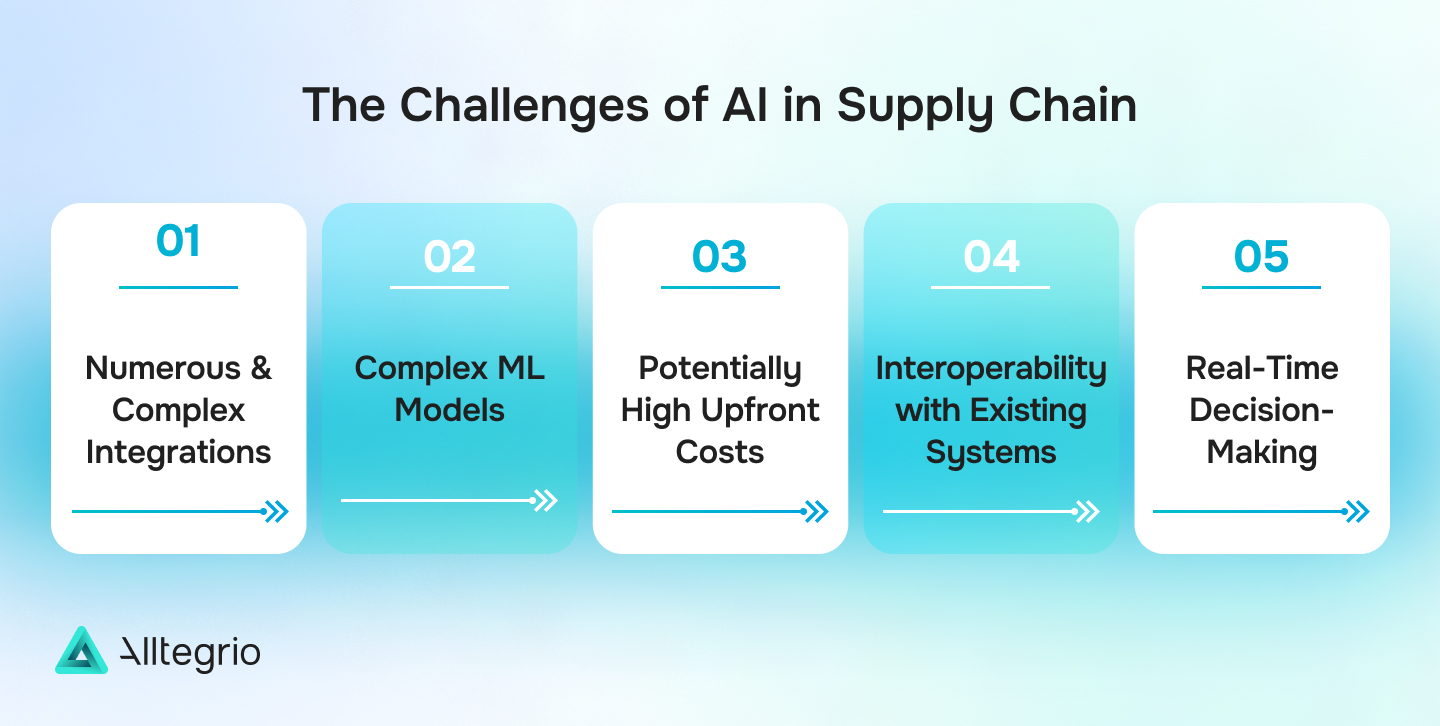
Even with all the benefits, you must remember that introducing AI in logistics also involves some risks. The main among them are:
Data security A logistics company gathers a huge volume of valuable data, which can be seriously costly in case of a leak. This data commonly involves customer information, shipment details, and key operation metrics, all of which make it very attractive to cybercriminals. A breach not only jeopardizes the integrity of the supply chain but can also damage a company’s reputation and erode customer trust.
Transparency Implementing AI in logistics and transportation might lead to accountability and transparency issues, especially when algorithms operate independently of human actors. The unknown basis for some decisions and choices will likely pose serious ethical dilemmas when AI systems can operate independently. These risks can only be reduced if the organization implements proper security measures and identifies the right balance between automation and human intervention.
Effect on workforce Integrating AI in logistics can displace a part of the workforce as automation might take over duties that humans traditionally carried out. This can even lead to a skills gap where employees must learn new technologies or risk being redundant. Companies should invest in training programs that would help the human workforce shift into newer roles complementary to the work technologies of AI. This would ensure that human expertise remains a crucial link in the logistics chain.
Risk of unpredictability AI supply chain optimization tools may pose operational risks due to their unpredictability. Algorithms are only as good as their training data. When input data is poor or biased, its outputs could lead to poor decision-making. These might include misrouting shipments, misestimating delivery times, or other issues impacting the entire supply chain.
Real Case Studies: Successful AI Apps in Logistics
Multiple successful businesses are already implementing AI in supply chain and logistics optimization. Some of the most well-known examples include:
IBM During the great supply chain collapse caused by the pandemic, IBM developed and implemented its own cognitive supply chain. The results were staggering. Not only did the company ensure 100% order fulfillment, but it also managed to reduce costs by $160 million. Data Analytics services, transparency, availability, and real-time tracking were the key elements of this project’s success.
BMW BMW completely revolutionized its factory workflow, integrating the Omniverse by NVIDIA. The widespread introduction of robotics and other automated devices streamlined multiple processes in logistics and manufacturing. Omniverse developed a digital twin that allowed tracking of all processes within the BMW production factory in real time and helped develop best practices for optimization.
Emerson The renowned automation leader Emerson uses specialized tools like Oracle to maximize supply chain optimization. Most importantly, the company spearheads logistics technology trends and focuses on making supply chains more transparent. Real-time tracking is crucial to ensure fast responsiveness and quality of service.
These companies are giants capable of dedicating huge budgets to fully enjoy the benefits of AI in logistics. However, today even SMBs can afford to develop custom AI and ML tools that will boost their operations fast. Start with Alltegrio Machine Learning Consulting services if you want to know how to leverage AI in supply chain and logistics for your specific case.
Logistics Technology Trends to Watch
The outlook for AI in logistics is really promising, with a variety of trends in store, including:
Self-driving trucks: AI-driven autonomous trucks would become more common, reducing human error and operating costs while improving delivery efficiency.
Delivery drones and robots: AI-driven drones and ground robots will become more ubiquitous, especially in cities and for contactless deliveries.
Predictive analytics: The algorithms used by AI in logistics will improve demand forecasting, inventory management, and procurement processes by analyzing historical data and market trends.
Warehouse automation and robotics: AI-powered robots will be used more extensively for picking, packing, and sorting tasks, which will increase efficiency and lower labor costs.
Integration of AI and IoT: combining AI with the Internet of Things (IoT) will enhance asset tracking, environmental monitoring, and equipment diagnostics.
Predictive maintenance: AI in logistics and transportation can predict equipment failures, reducing downtime and maintenance costs. Meanwhile, an improved understanding of the equipment’s lifecycle would enable better investment and replacement strategies.
Dynamic routing: Real-time optimization of delivery routes using current conditions on traffic, weather, and other variables to reduce delivery times and fuel consumption.
Document processing: NLP will automate the processing of logistic documents such as bills of lading and invoices, reducing errors and administrative workload.
Secure transactions via blockchain: AI integrated with blockchain will enhance transaction and supply chain data security and transparency.
Emissions reduction: AI will optimize routes and loads to reduce carbon emissions and help attain sustainability goals. It can also minimize packaging and inventory waste, hence more sustainable practices.
Edge computing: Edge AI will process the data locally, reducing latency and improving real-time decision-making capabilities for logistics operations.
Digital Twins simulation and modeling: Digital replicas created for logistics networks will enable companies to simulate scenarios, optimize processes, and predict outcomes using AI analysis.
Training Your Team for AI Adoption in Logistics
The benefits of AI in logistics are many. However, to implement AI successfully, one needs to adequately equip the workforce. Businesses should have proper training programs in terms of AI literacy, where employees learn what to do with these advanced new tools. By fostering an environment of continuous learning, organizations can best cope with the transition phase and maximize the benefits of that technology.
Investment in the development of your team is an integral part of the long-term success of AI initiatives in logistics. In essence, AI is a game-changer because of the different avenues it provides for efficiency and cost savings. Therefore, businesses interested in obtaining the benefits of AI in logistics need to ensure their employees can maximize the use of this technology. Therefore, it’s imperative to provide specialized training as well as foster a culture that embraces the positive change brought by technology.
How Can Businesses Measure the ROI of AI Investments in Logistics?
The Return on Investment for AI initiatives can be challenging but essential to measure. Businesses should focus on key performance indicators, such as:
Cost savings realized from improved efficiencies
Increases in customer satisfaction metrics
Reductions in operational errors and delays
Enhancements to throughput and productivity rates
If analyzed before and after the implementation of AI supply chain optimization tools, these metrics give organizations an idea of the financial impact of their investments. This can help them make data-driven decisions about future improvements.
Who Should Invest in AI Supply Chain Optimization Tools?
While this investment has traditionally been for large corporations, AI in supply chain and logistics is increasingly viable for SMEs. Today, all companies seeking improved logistics efficiency, cost reduction, and enhanced customer satisfaction can integrate AI technologies. All you need is motivation and partnership with a reliable and experienced AI solution development company.