

Predictive analytics in sports uses historical and real-time data with machine learning to forecast game outcomes, player performance, and injury risk. Teams use it for strategy and recruitment; sportsbooks use it for odds. Models draw on player stats, biometrics, and conditions.
We’re living in a time where decision-making must rely on hard data. In this context, using predictive analytics in sports to upgrade team performances and strategies has become a necessity. The art of making predictions about upcoming events by using data from past performances enables teams to make better decisions in their quest for success. This article will talk about the different dimensions of AI in sports analytics, as well as its importance and practical applications.
What Is Predictive Analytics in Sports?
Predictive analytics in sports projects future outcomes by applying statistical techniques and algorithms to historical data. Therefore, using Predictive Analytics Consulting can provide teams and organizations with a way to analyze player performance, game dynamics, and even fan engagement. By incorporating advanced analytics, teams can uncover insights that traditional methods may overlook.
These methodologies involve gathering large amounts of data on various aspects of the sports processes, such as:
- Players’ statistics
- Weather conditions
- Opponents’ strategies
The data is then transformed using Machine Learning models. The results give coaches, managers, and analysts a predictive framework for forecasting various game scenarios. Note that technological advancements have afforded sports franchises access to data sources previously out of reach due to complexity or resource intensity.
Some of the best AI in sports examples come from player recruitment and development implementations. In these areas, AI tech has no competition, as its capabilities are astonishing. Analyzing a player’s efficiency over time can show the potential that a conventional scouting method might miss.
For example, player efficiency ratings, shooting percentages, and even biometric data are all metrics that can be analyzed. Therefore, predictive analytics sports solutions can project how good a player will be in the future and how long they’ll last in their sport. This data-driven approach not only upgrades the efficiency of decision-making but also enables optimization in the training regimen to suit individual player requirements.
Using AI in sports analytics extends to fan interaction and marketing strategy development as well. Teams can analyze data from ticket sales, social media interactions, and merchandise purchases to better understand fans’ behavior and preferences. Therefore, sports businesses can develop targeted marketing campaigns, improve the game-day experience, and even adjust pricing strategies according to forecasted attendance.
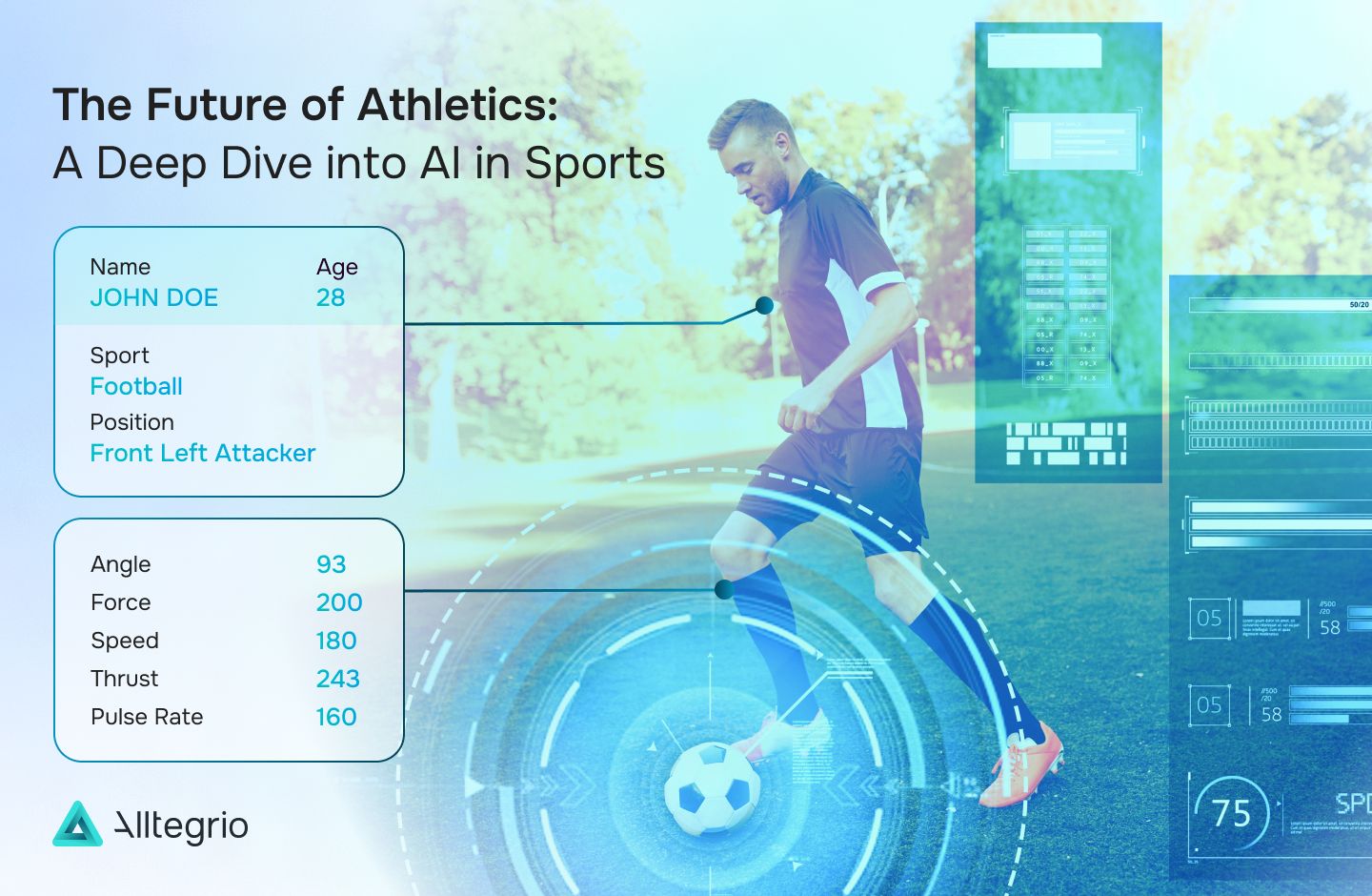
What Methods and Strategies Does Predictive Analytics in Sports Use?
Predictive analytics sports solutions commonly use several methodologies, broadly classified into:
- Regression Analysis
This statistical method helps in understanding relationships between various variables, such as player performance metrics and game outcomes. - Machine Learning
Using algorithms that can learn from data, this approach makes predictions on input patterns of complexity that are impossible for humans. Essentially, ML makes the enormous processing power of machines work for you. - Simulation Models
These models allow teams to create virtual representations of a game. This can enable them to consider various outcome scenarios that are possible under different conditions.
These and other methods allow sports analysts to help you develop data-driven sports strategies. Visualized forecasts and assessments can inform top-level management of the situation and help them make strategic decisions, such as lineup changes and in-game tactics.
Predictive analytics can also elevate player recruitment by assessing signings based on their historical performance data and foreseen future contributions. Teams studying large datasets can pinpoint undervalued players who may perform well above their market value. Therefore, the team can make smart investments and perform roster optimization.
Apart from evaluating players, predictive analytics sports tools also form an integral part of engaging fans and marketing strategies. Teams can study fan behavior and preferences by analyzing data related to ticket sales, merchandise, and social media interactions. This insight enables organizations to adapt their marketing campaigns and enhance the overall experience to retain existing fans and attract new ones. Sports franchises can predict attendance, optimize pricing, and improve promotional activities using predictive models that will enhance revenue growth and help build a loyal fan base.
Also, don’t forget that AI sports betting predictions are also possible. These are invaluable for businesses that run betting platforms and want to achieve high accuracy.
What Tools and Technologies Are Commonly Used for Sports Analytics?
A variety of tools and technologies facilitate predictive analytics in sports, including statistical software such as R and Python for Data Analytics services. Data scientists will also use specialized platforms that streamline analytics processes. Tools like Tableau enhance data visualization, making it easier for teams to interpret complex datasets.
Fast-developing technologies such as Artificial Intelligence and Machine Learning frameworks enable predictive models to evolve dynamically, providing richer insights and predictions than ever before.
If you are interested in a more detailed breakdown of tools commonly used to integrate predictive analytics in sports, check out the examples below:
| PURPOSE | TYPE | EXAMPLES | FUNCTION |
| Data Collection | Wearable Devices |
|
Collect real-time physiological and biomechanical data such as heart rate, speed, acceleration, and distance covered. |
| Optical Tracking Systems |
|
Use camera systems to track player and ball movements on the field or court. | |
| Sensors & IoT Gadgets |
|
Capture specific performance metrics like shot accuracy, swing speed, or jump height. | |
| APIs & Data Feeds |
|
Provide live statistics and historical data for various sports events. | |
| Web Scraping |
|
Extract data from websites for supplementary statistics and information. | |
| Data Processing & Management | Database Management |
|
Store and manage structured and unstructured data efficiently. |
| Data Integration |
|
Combine data from different sources into a unified view. | |
| Big Data Platforms |
|
Handle large volumes of data with high speed and reliability. | |
| Cloud Platforms |
|
Offer scalable computing resources and storage solutions. | |
| Data Analysis | Programming Languages & Libraries |
|
Data manipulation, statistical analysis, modeling, data visualization, and machine learning. |
| Statistical Software |
|
Advanced statistical analysis and predictive modeling. | |
| Machine Learning Frameworks |
|
Develop and train machine learning models for predictive analytics. | |
| Data Visualization |
|
Create interactive dashboards and visual representations of data insights. |
What Types of Data Are Crucial for Effective Predictive Analytics in Sports?
The effectiveness of predictive analytics sports tools relies heavily on the quality and diversity of the data collected. So, the most important question is not ‘How is AI used in sports?’ but ‘How do I get sports data for AI to process?’. Major types of data collected include:
- Player Statistics
These are well-known measures, such as points per game, assists, defensive capabilities, shooting accuracy, and many others, that serve as vital variables in predictive models. - Biometric Data
Information like heart rate, fatigue levels, and sleep patterns all relate to player health and help predict performance. - Game Contextual Data
These factors include venue, weather conditions, and previous match-ups, which provide context and allow for more accurate predictions.
As you can see, using AI in sports analytics requires a holistic view of the performance metrics that lead to successful outcomes through compiling and analyzing these diverse data types. Advanced analytics also considers psychological factors such as motivation and team dynamics, which play a crucial role in player performance. Knowing how players handle themselves when under pressure or how well they mesh with teammates offers insights not traditionally provided by statistics.
Additionally, technology is a big factor in augmenting this data gathering. For instance, wearable devices can track real-time metrics during both training and games. These provide coaches and analysts with immediate insights into player condition and performance. This technology integration not only enriches the data pool but also allows for more dynamic adjustments to training regimens and game strategies. Ultimately it leads to improved team performance and provides a major competitive advantage.
What Is the Role of Data Collection in Predictive Modeling?
Data collection is the backbone of predictive modeling in sports. This ranges from wearable technology that tracks player movement to comprehensive databases that catalog player statistics. Each source plays a big role in making the models as accurate as possible. Therefore, data collection methods are a huge part of your AI strategy planning.
Smart collection strategies ensure the flow of data is well-kept and constant, which is necessary for real-time analysis and adaptation. Recognizing this also means you must procure clean and reliable data for effective predictive results. Be sure to consider this when choosing a Data Science services provider for your predictive analytics sports projects.
Start using predictive analytics in sports
Contact the Alltegrio Team for a free consultation to learn how you can implement AI to improve athlete and team performance.
Book a ConsultationHow Does Predictive Analytics Influence Game Outcomes?
Applying predictive analytics in sports can directly impact game outcomes by offering deep insights into the dynamics between teams and how opponents operate. Coaches can use analytics to determine the strengths and weaknesses of players, which will, in turn, affect tactics.
For instance, if an opponent tends to make certain mistakes, one can devise a game plan that takes advantage of this during play. This level of analysis surpasses just player statistics, looking into historical performance data, injury reports, and even psychological factors that could influence player behavior under pressure.
Moreover, predictive models can even simulate game plays, showing a vision of how certain strategies might unfold. Teams using simulations to build data-driven sports strategies have the option to test a variety of tactics without risking crucial moments of their season in high-pressure situations.
These simulations can account for just about everything, from player fatigue and weather to crowd dynamics to the final result of the game. Coaches can do an unlimited number of play simulations to see what works best and go into the game with a pre-rehearsed plan for every scenario that might occur.
This ultimately fosters a culture of data-driven decisions that can elevate both player performance and team effectiveness. On game day itself, in-game analytics can recommend tactical adjustments that are then dynamically applied against the opposition.
Integration with wearable technology is also essential when implementing predictive analytics in sports. Since live data can be collected across the movements and physiological responses of players, wearables are key to accessing these forecasts. This information can be invaluable for coaches when making informed decisions about substitutions or tactical shifts. With real-time data on how players are performing, the coach can easily adjust tactics to ensure success.

What Are the Key Metrics to Analyze for Optimal Performance of AI in Sports Analytics?
Predictive analytics in sports aims to identify key performance metrics to give meaningful insights. These metrics include but aren’t limited to:
- Player speed and acceleration
- Distances covered
- Jump height
- Heart rate
- Fatigue indicators
- Pass accuracy
- Shoot efficiency
- Ball control
- Dribbling success
- Technical errors
- Spatial awareness
- Offensive and defensive contributions
- Positioning
- Set piece effectiveness
- Decision-making speed
- Concentration and focus
- Resilience
- Stress markers
- Injury history
- Recovery
This list can go on for a while, and it will become even bigger, accounting for factors that matter within specific sports. Therefore, it’s extremely hard to answer the question of how is AI being used in the sports industry. The answer is that every team and organization can implement this technology exactly how they want to. There are very few factors and metrics that technology today is unable to measure. Therefore, the exact application depends solely on your goals.
Tracking these metrics over time enables teams to measure player progress, game performance, and even team cohesion. This provides an evolving understanding of what works and drives victory.
The influence of predictive analytics does not stop there but goes further in the realm of long-term strategies for player development and recruitment. A team can sift through vast volumes of data to discover prospects, thereby evaluating not just the current level of performance but also projects of future growth based on various metric variables. This holistic player evaluation approach creates a situation in which teams are not only focused on winning now but also on building a sustainable competitive advantage for years to come.

What Are the Advantages of Data-Driven Strategies Built Implementing AI in Sports Analytics?
Using data-driven sports strategies with predictive analytics benefits teams in various ways, including better performance, resource optimization, and improved decision-making.
- Making Better Decisions
Insights here include the basis on which coaches and management make informed decisions during key moments in games. - Injury Prevention
AI injury prevention relies on analytics that can help predict player fatigue and potential injuries so that teams can handle player workloads more effectively. This is crucial to prolong athletes’ careers. - Fan Engagement
Data analytics also covers fan engagement and helps understand their behavior. These insights can be used to optimize marketing strategies and improve fan experience overall.
This data-driven strategy forms the basis of continuous improvement, which is essential in sports, as they are highly competitive. In this context, predictive analytics sports solutions are crucial to your team’s continuous development.
Advanced analytics integrated into training regimens have really transformed athletes’ preparation for competitions. Wearables and tracking technologies have enabled teams to consider real-time player performance data like speed, heart rate, and movement pattern. This helps them fine-tune their training programs while understanding their strengths and weaknesses, leading to personalized development plans for each athlete. Therefore, players can optimize their training and recovery to peak when it matters most.
Not to mention the financial relevance of such data-driven sports strategies. Teams that can use data analytics in their approach get some lucrative opportunities in player acquisitions and trades, ensuring wise investment in talent that fits into their strategic goals.
By examining player statistics, market trends, and even social media sentiment, organizations can ensure that such decisions enhance on-field performance and contribute to the franchise’s long-term financial sustainability.
What Are the Challenges of Using Predictive Analytics in Sports?
While using predictive analytics in sports affords new opportunities, several challenges arise from applying this technology.
- Data privacy and integrity continue to be concerns. Making certain that data is correctly collected and in compliance with privacy regulations is essential for ethical practice in sports analytics. In addition, stakeholders increasingly demand transparency in data collection processes because they require an explanation of how their data is being used and protected.
- Some teams are culturally resistant to committing to data-driven sports strategies and decision-making. Traditional thinking often conflicts with a new reliance on metrics, and workflows developed over the years might be hard to absorb analytics into. Coaches and players accustomed to trusting intuition and experience may struggle to adopt the opposite way around.
- The continuous development in technology is a challenge in itself when integrating AI in sports analytics. Keeping abreast with new tools and means can strain budgets and resources, requiring proper planning and investment. As predictive analytics sports tools have gotten increasingly sophisticated, teams must ensure their staff is adequately trained to interpret and use the data effectively. Moreover, the rapid advancement in technology also means that teams must be ready at any moment to change course quickly. They must embrace new systems and methodologies if they want to stay relevant in an ever-changing competitive environment.
- Over-reliance on predictive models can lead to misinterpretation of data. This can be especially dangerous in AI sports betting predictions and can lead to enormous financial losses. Models indeed may provide a certain kind of insight, but they are not perfect and can also be susceptible to biases of the data or flawed assumptions in algorithms.
Build data-driven sports strategies with AI
Let’s work together to improve your team performance and prevent athlete injuries using AI-driven solutions.
Contact UsHow Can Predictive Analytics Be Used to Optimize Player Performance?
Predictive analytics in sports help optimize players’ performance, relying on assessments of multiple factors, both biometric and overall game processes. Coaches use this data to develop training regimens that match each player’s strengths and weaknesses. Therefore, they can improve and sustain their athletes’ fitness levels.
Using AI in sports analytics could also provide insights in real-time during games so that teams would know exactly when to deploy players. For example, if a player’s shooting percentage falls below normal during a game, predictive models could suggest substitutions or shifts in strategy to optimize outcomes.
Moreover, performance analytics offers opportunities for feedback, helping players understand their areas for improvement. This personalized approach encourages athlete development and cultivates an atmosphere that maximizes each player’s potential.
In addition, implementing predictive analytics in sports assists with injury prevention and recovery. Historical data on player workloads, injury patterns, and physiological responses can help teams identify risk factors leading to possible injuries. Such data might indicate that, for example, a player is reaching their physiological limit based on the load from recent training. This would call for coaches to either scale back practice intensity or allow more recovery time to minimize injury risk. This proactive approach helps maintain player health and ensures that athletes are at their peak performance when it matters most.
Also, the integration of wearable technology has transformed the way teams gather and analyze data. With devices measuring heart rates, movement patterns, and fatigue levels, real-time insights can be fed into predictive analytics sports models. This hyper-awareness enables coaching staff to make informed decisions on player rotations, training focus, and even nutrition plans that might need tailoring for individual players. As technology keeps developing, the possibilities of predictive analytics in sports will only expand, providing deeper insights into optimizing player performance and enhancing overall team success.

How Can Teams Effectively Implement Predictive Analytics into Their Operations?
To successfully implement predictive analytics in sports organizations and teams, they should focus on building a comprehensive data infrastructure that encompasses collection, analysis, and interpretation. Working with a dedicated analytics team is fundamental, as they have the expertise to sift through data and derive actionable insights.
Engaging with technological partners can also enhance your AI sports betting predictions and other capabilities. Often, outside professionals bring specialized tools and expertise to the table. Continuous education and training on emerging technologies and methodologies are of great value in fostering a data-centric culture within organizations.
In addition, transparency and collaboration within the departments, such as coaching, management, and analytics, foster more holistic decision-making and communication for greater performance improvements.
Beyond these initial steps, sports organizations should consider mainstreaming real-time data analytics. This would involve wearable technology and performance tracking systems that provide real-time feedback on player performance and health metrics. By analyzing this information in real-time, teams would be able to make on-the-fly adjustments throughout games. Therefore, they can enhance their strategic approach and potentially alter the outcome of critical matches.
Moreover, adopting machine learning algorithms will significantly raise the bar on any team’s predictive abilities. ML algorithms can analyze large volumes of data to identify patterns and trends that may not be as easily visible to human analysts. By comparing historical player performance data against current in-game conditions, a team can predict player fatigue levels, times for optimal substitution, and even injury prevention.
This proactive approach will help manage the players and enhance the overall team performance by ensuring that the athletes are utilized to their fullest potential throughout the season.
What Is the Impact of Predictive Analytics on Player Recruitment?
Predictive analytics in sports also transforms player recruitment processes through high-precision estimations of player potential and their fit within teams. Teams can use statistical analysis of player stats and performance data to gain more insight regarding trades, drafts, and acquisitions.
Data-driven sports strategies in recruitment reduce the uncertainty accompanying player transfers. Therefore, organizations are better off assembling cohesive, effective teams that enhance overall performance.
Integrating Predictive Analytics into Coaching Strategies
Predictive analytics integrated into coaching strategies involve a close collaboration with analysts to present actionable insights directly applicable to gameplay. Coaches will have to work closely with the data team to ensure analytics intervene in training regimens and the strategy involved in playing.
As predictive analytics in sports continuously redefine the game’s landscape, coaching’s cooperative role with analytics will be the more instrumental factor in achieving higher performance levels and sustained success.

What Are Some Cases of Teams Successfully Using Predictive Analytics?
Many sports teams have unleashed predictive analytics into their work with amazing success. For instance, the Oakland Athletics rewired the game of baseball regarding the true importance of statistics. They used advanced analytics to achieve unprecedented success in compiling a competitive team on a shoestring budget.
Moreover, basketball teams such as the Houston Rockets have embraced data-driven sports strategies in revolutionizing their offensive tactics, emphasizing three-point shooting and spacing based on predictive insights.
Within football (soccer), teams like Manchester City have integrated data analysis into their player recruitment processes. They are utilizing analytics to assess potential transfers and maximize team contributions.
Another strong example lies within the National Football League, which includes teams such as the New England Patriots. These teams have used predictive analytics in sports to improve their game strategies and player performance. By analyzing vast amounts of data from previous games, the Patriots have identified a pattern in opponent behaviors. Therefore, effectively applying their game plans has become easier and more result-oriented. This has not only significantly enhanced their in-game decision-making but also supported the sustained success over the years marked by multiple Super Bowl victories.
On the ice hockey side, the Toronto Maple Leafs have been one of the most progressive teams to date in implementing predictive analytics into player development and on-ice strategy. The utilization of advanced models to measure on-ice player performance allows the organization to make evidence-based decisions on trading players and selecting draft picks. This commitment to data-driven decision-making further enhanced their competitive edge while giving way to continuous cultural improvement from within that has kept them at the top of a league in constant evolution.
Why Should Sports Businesses Invest in Data Annotation and Predictive Analytics Services?
Investing in data annotation and predictive analytics in sports promises substantial returns. This might be the key to keeping the teams ahead of the competition. The insights from predictive models drive better performance, efficient resource management, and more fan engagement, all of which are critical in today’s highly competitive sports market.
Moving towards a scenario where data-driven sports strategies are becoming elemental to success, embracing predictive analytics gives teams a competitive edge. However, most importantly, AI in sports analytics gives you a framework for continuous growth and innovation.