As the demand for faster, reliable, and cost-effective delivery of goods grows, AI for logistics changes the market and the competitive environment. Let’s explore the various applications of AI in logistics, highlighting its impact and the options it offers. Learn our expert tips as to how logistics companies benefit from using artificial intelligence logistics to optimize operations, enhance supply chain visibility, and provide customer service, elevating overall efficiency.

Understanding Artificial Intelligence in Logistics

Applying AI technologies in logistics has changed every workflow in the industry in recent years. AI models’ ability to process vast amounts of data, make intelligent decisions, and predict outcomes helps management make the right decisions and transform their services better, covering the growing demand for logistics services.

For example, integrating AI and robotics has significantly advanced warehouse automation. AI-powered robots efficiently sort, pick, pack, and manage inventory, accelerating order fulfillment. Their intelligence allows them to perform many tasks traditionally handled by human workers.

Additionally, AI-driven sensors, cameras, and RFID tags enable inventory tracking and monitoring, helping inventory management and reducing losses. Real-time data processing helps identify patterns, make predictive analyses, prevent potential supply chain problems, and improve warehouse workflows.

Automating different processes is particularly vital these days, given the shortage of warehouse workers, the threat of union strikes, and the rising cost of human labor. As a result, applying AI systems combined with robotics is an option for any logistics business to follow market trends and use AI capabilities.

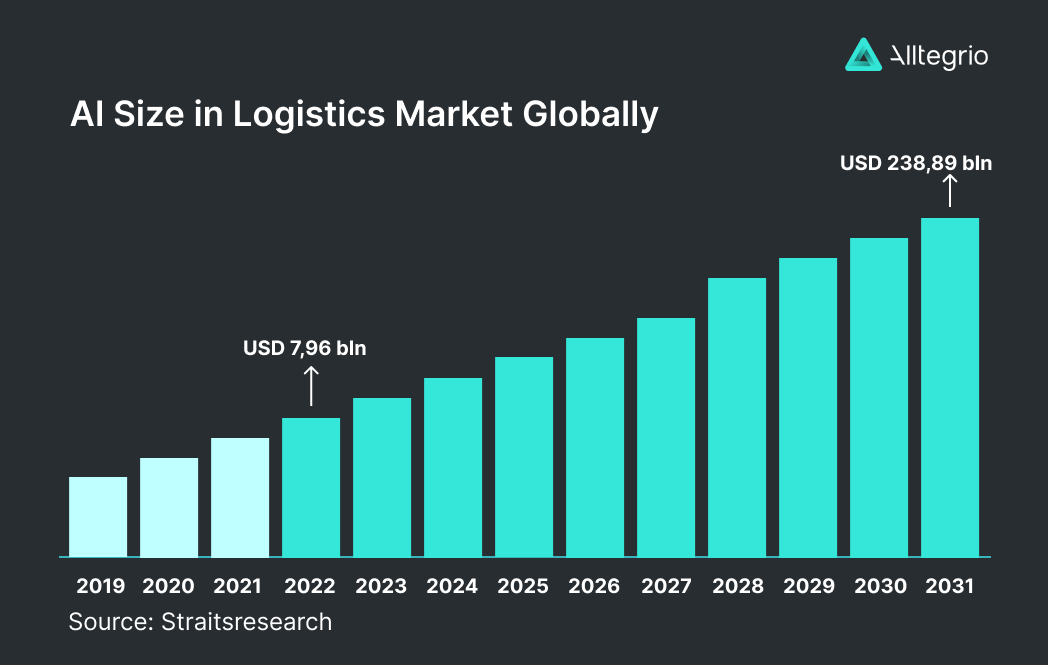
The global AI size in logistics market was valued at USD 7.96 billion in 2022. It is projected to grow to USD 238.89 billion by 2031, with a compound annual growth rate (CAGR) of 45.93% from 2023 to 2031.

Source: Straitsresearch

block-image

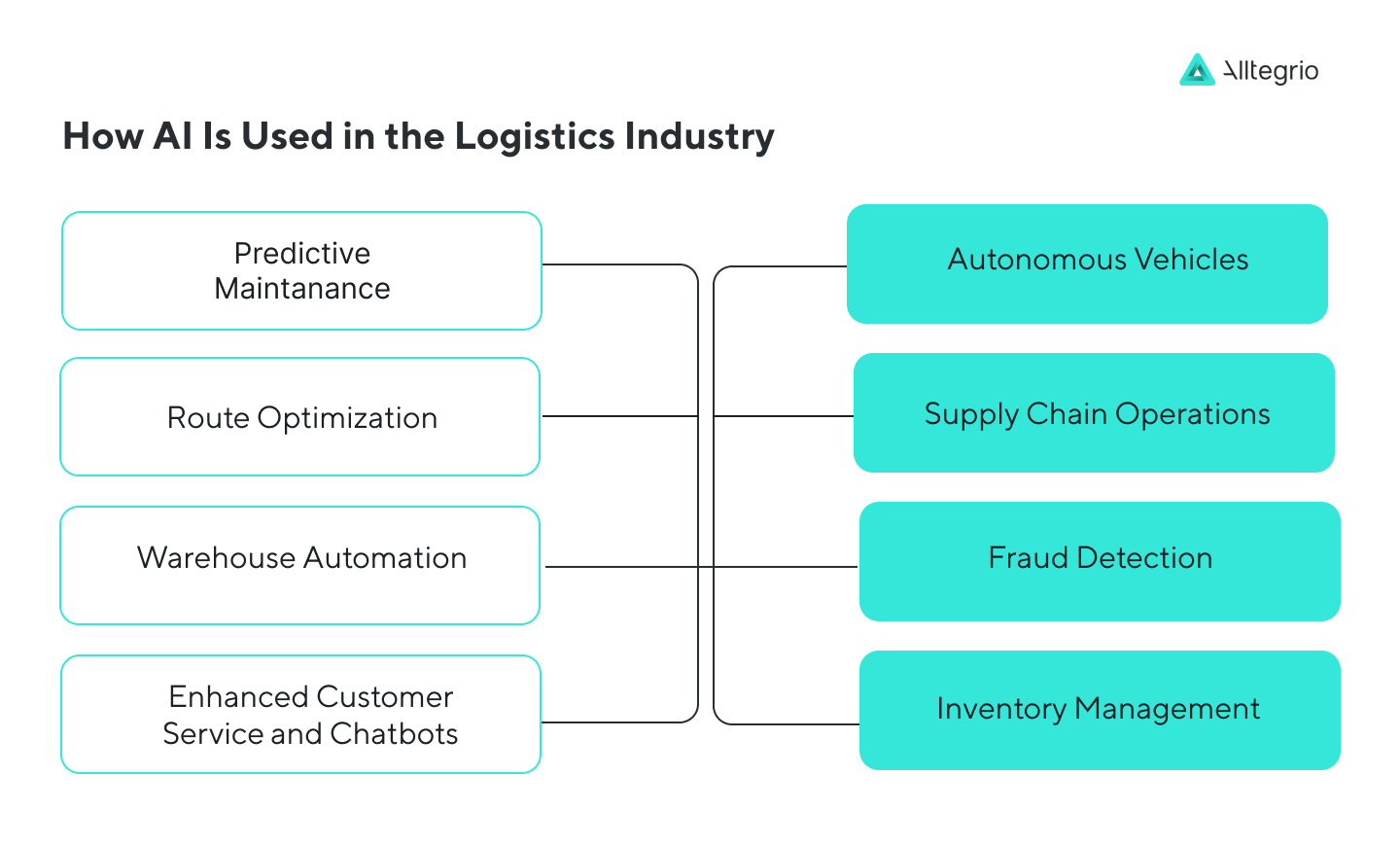
The Function of AI: How AI Is Used in the Logistics Industry

Artificial intelligence and machine learning algorithms are transforming the logistics industry as we know it, making business processes, in-warehouse operations, and goods transportation cost-effective and customer-oriented. As AI technology continues to evolve, its role will only expand, helping the logistics companies to implement innovative solutions and change for the better.

Predictive Maintenance

Predictive maintenance in logistics uses AI and machine learning algorithms to leverage vast amounts of data to identify and resolve issues before they cause malfunctions in systems, logistics operations, services, or processes. This technology has seen rapid market growth, and businesses with strong predictive maintenance systems can predict when and where service breakdowns might occur. This capability enables maintenance teams to address problems, proactively preventing potential service disruptions.

AI-driven predictive analytics helps make accurate demand forecasting, optimize inventories, calculate transportation volumes, and improve supply chain management. Management teams have tools to predict future trends, improve the way a company responds to market fluctuations, and organize the logistics process.

Route Optimization

AI in logistics and transportation involves planning the most efficient route for delivery vehicles. AI route optimization software can offer optimal ways to save drivers time, fuel, and resources by considering distance, traffic conditions, and delivery windows. As you know, manual route optimization is complex, time-consuming, and prone to human error. Fortunately, AI in transportation and logistics has significantly improved logistics processes.

A recent analysis by Report Linker predicts that by 2030, the route optimization software market share will be worth $21.7 billion, due to implementing AI solutions.

Warehouse Automation

AI-driven automation technologies, such as autonomous mobile robots (AMRs) and robotic piece-picking solutions, improve warehouse workflows. These intelligent systems automate tasks such as locating specific items and efficiently perform tasks like picking, sorting, packing, and shipping process. AI-driven systems boost productivity, minimizing human errors.

It’s worth noting also, that AI software solutions help management continuously analyze data, track key performance indicators (KPIs), and identify areas for process improvement. Moreover, leveraging logistics AI-generated insights allows management to pinpoint and eliminate operational inefficiencies.

Autonomous Vehicles

Autonomous vehicles (AVs) make a big change in the transportation industry, making it safer and more efficient. They utilize advanced sensors and real-time traffic data analysis to reduce accidents. AVs represent a major advancement in road safety. They can read road signs and autonomously respond to changes, reducing human errors and the likelihood of accidents. Specialized AI algorithms enable these vehicles to make quick, intelligent decisions, ensuring safer roads and fewer collisions.

However, AVs are expensive to produce and must comply with stringent regulations. Concerns about pedestrian safety and public trust, exacerbated by issues of liability in case of accidents, also exist.

Enhanced Customer Service and Chatbots

AI chatbots and virtual assistants provide real-time assistance and help customers get answers to their queries, such as tracking shipments and handling complaints, i.e. improve customer satisfaction. These routine tasks do not need a human touch anymore and allow your employees to spend valuable time and effort on more complex tasks.

Inventory Management

AI analysis helps optimize inventory levels by predicting demand, identifying slow-moving items, and suggesting reordering strategies. This reduces holding costs and ensures the availability of products when needed.

Supply Chain Operations: Real-Time Tracking and Visibility

Companies that integrate data at the core of their supply chain and apply AI can create an intelligent supply chain network. It helps with real-time insights into supply disruptions and demand fluctuations, addressing issues promptly and effectively.

Management can quickly respond to unique customer requirements, improve product availability and service levels, reduce lost sales and inventory costs, and enhance production and fulfillment efficiency.

An intelligent supply chain management not only helps maintain key performance metrics, such as On Time and In Full (OTIF) service, but also supports sustainability efforts by significantly reducing the supply chain’s carbon footprint and overall environmental impact.

Fraud Detection

Logistics fraud detection algorithms help businesses identify and prevent fraudulent activities. These algorithms analyze order patterns, customer behavior, and payment information to spot suspicious or fraudulent orders.

Logistics fraud detection algorithms monitor carrier and supplier activities to uncover fraudulent practices such as unauthorized charges, false claims, and delivery scams.

These algorithms analyze real-time data from IoT devices to detect suspicious movements or deviations from expected routes and identify potential cargo theft incidents.

block-image

Benefits of Implementing AI in the Logistics Industry

Improved Efficiency and Enhanced Accuracy

Logistics AI adoption enhances warehouse efficiency and optimizes logistics operations by streamlining processes, significantly lowering operational costs, reducing delays, and increasing operational efficiency and predictive capabilities. AI algorithms also improve the accuracy of demand forecasting, inventory management, and route planning, minimizing errors.

Improved Decision-Making Process

When your company starts using AI algorithms, they will analyze large data sets and process vast amounts of data. It helps logistics managers gain insights and make informed decisions.

You need to detect patterns and anomalies in logistics operations, to identify potential issues to avoid them in the future before they become significant problems. Using historical data helps predict future trends, such as demand forecasting, helping management plan more effectively.

Real-Time Tracking and Visibility

As part of artificial intelligence logistics transportation, IoT devices help track shipments. When we say IoT devices we mean advanced sensors and GPS technology. This allows logistics managers to monitor the exact location of goods and customers can receive accurate and timely updates about their shipments, improving customer experience. Managers also get visibility into the entire supply chain to identify bottlenecks and delays. This transparency helps address issues proactively.

Better Inventory Management

Inventory management is a vital part of warehouse workflows. Logistics businesses use AI systems to automate reordering and identify low or overstocked stock levels. When logistics companies start streamlining warehouse operations by optimizing the placement of goods and improving picking and packing efficiency.

Increased Customer Satisfaction

Logistics artificial intelligence optimizes delivery routes by analyzing real-time traffic data, weather conditions, and delivery windows to make deliveries faster and meet customer expectations. Customers receive the ordered products on time by minimizing processing and inventory management errors. Analyzing customer behavior and preferences allows for personalized interactions, which offer customization to enhance the customer experience.

Cost Savings

Automating repetitive tasks such as data entry, order processing, and route planning reduces the need for manual labor, cutting down on labor costs and increasing productivity. AI-optimized routes minimize fuel consumption and wear and tear on vehicles. It lowers fuel expenses and reduces maintenance costs, extending the lifespan of your vehicle.

block-image

AI in Logistics: 3 Real-Case Examples of Large Corporations and Innovative Startups

Large corporations and innovative startups implement AI systems to transform their logistics operations. Below are detailed examples of how these entities are implementing AI in logistics.

Amazon

Amazon’s centers utilize Kiva robots to transport goods within the premises. These robots move shelves with products to human workers, helping reduce the time needed for sorting, picking, and packing orders.

AI algorithms also make inventory management easier, predicting inventory requirements based on historical sales data, seasonal trends, and promotional activities. Machine learning algorithms allow for determining the most efficient delivery routes for delivery vehicles, reducing fuel consumption and delivery times.

Source: https://youtu.be/ZWonAz7Kczs?feature=shared

Flexport

Flexport is a digital freight forwarder that uses AI solutions to streamline shipping processes. The platform coordinates shipment from manufacturer to customer, helping businesses ship anywhere.

Flexport’s intelligence system automates customs clearance, reducing delays and costs. It provides real-time shipment visibility. AI-powered tracking and predictive analytics allow clients to make informed logistics decisions.

FedEx

FedEx’s platform uses AI to provide real-time tracking and monitoring of shipments. It’s vital, especially for sensitive deliveries such as pharmaceuticals.

FedEx uses AI to predict package delivery times and optimize routes. This approach improves delivery accuracy and helps in resource allocation. FedEx also uses AI chatbots to handle customer service inquiries, responding instantly to common questions.

How Alltegrio Can Enhance Your Logistics Operations with AI Support

At Alltegrio, we specialize in developing customized AI-powered software solutions to transform logistics operations and warehouse management. Our team offers AI solutions to meet small and medium-sized businesses (SMBs) and large enterprises’ unique needs. Our experts will ensure that your ideas are validated and developed into software products that help your logistics business succeed.

With 12+ years in the software development market, we provide our clients with custom IT solutions and generative AI services that align with their business strategy. With our expert guidance, discover the potential of your business data assets. We can develop a strategy for enhancing your existing infrastructure and seamlessly implement AI solutions to optimize your business processes.

Final Insights

Implementing AI in logistics can present several challenges. For instance, the effectiveness of machine learning largely depends on the quality of the input data—biased data can result in biased AI outputs. Additionally, building and maintaining AI systems requires significant investments in technology and expertise.

However, the proper strategy and approach, help manage challenges effectively, allowing businesses to realize the benefits of AI in warehouse operations, logistics and transportation fully.

At Alltegrio, we specialize in guiding companies through the complexities of logistics and artificial intelligence implementation, ensuring a smooth transition, and maximizing the benefits of advanced AI solutions.

How does AI contribute to reducing costs in logistics?

AI helps reduce costs in the logistics business by predicting demand and optimizing inventory levels. It allows for the reduction of excess stock and, therefore, storage costs. AI solutions help optimize delivery routes to lower fuel consumption and vehicle maintenance costs.

How does AI contribute to improving customer satisfaction in logistics?

AI improves customer satisfaction in logistics organizations by ensuring faster deliveries through optimized transportation routes and providing customers with real-time tracking updates. Analyzing customer behavior helps offer personalized interactions and recommendations, reducing errors in order processing and inventory management.

How is AI reshaping the efficiency of logistics operations?

AI maximizes resources and reshapes logistics operations efficiency. It offers improved accuracy by analyzing real-time data quality, which helps optimize delivery routes due to traffic and weather conditions. Automating repetitive tasks avoids human error and increases productivity. Predicting maintenance needs for equipment and vehicles reduces downtime and extends asset lifespans.

How can businesses ensure a smooth transition to AI-powered logistics solutions?

Businesses can ensure a smooth transition of existing infrastructure by assessing current logistics operations and finding areas where AI solutions can add value. Following some of our advice, you can succeed in the logistics market by choosing AI technologies that align with your business goals and partnering with a trusted AI solutions provider like Allegro - AI logistics service provider. Our team regularly monitors AI system performance and takes actions to optimize efficiency and effectiveness. We also recommend ensuring big data security measures are in place to protect sensitive information.

Subscribe to our blog!