
Overview
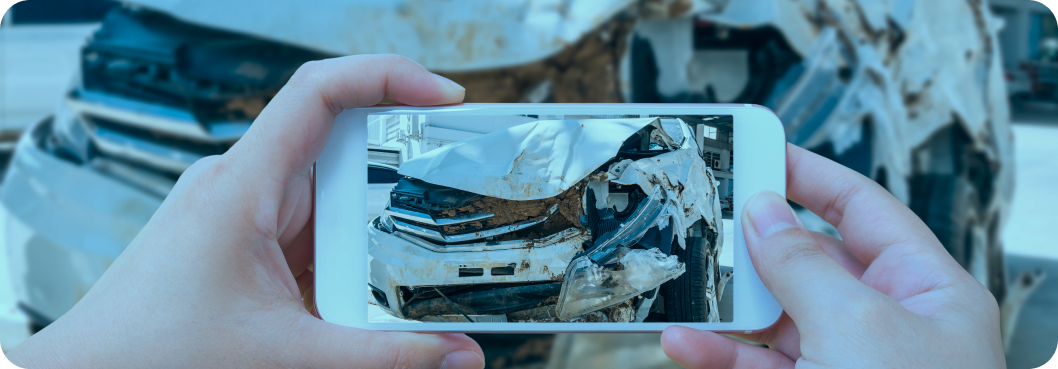
Our client is one of the major US insurance providers. They wanted to transform their low-value vehicle damage claims process by implementing AI in insurance procedures. Conventionally, in-person inspections take hours, increasing operational time and cost. The core objective was to automate vehicle damage evaluation using an AI solution that processes images. The tool allows for better accuracy, quicker claim processing, and more efficient resource utilization.
Solution
Our team applied an end-to-end image labeling and Machine Learning pipeline that can manage high volumes of data with high accuracy. This starts with extensive Data Annotation. Our team of 80+ annotators labeled and classified more than 1 million images each week at an accuracy rate of up to 99%. This data went into training our AI algorithms, which were able to assess vehicle damage from images uploaded by customers with complete accuracy.
We developed custom algorithms using advanced machine learning frameworks like TensorFlow and PyTorch to replace manual inspections with automated image analysis. This was followed by integration into the client’s infrastructure using custom-written Python scripts for data distribution and a secure, compliant cloud environment to handle the data safely.
-
0%
reduction in claim processing time
0%
accuracy in damage detection and assessment
+
0%
improvement in customer satisfaction
Technology Stack
- Programming Languages: Python, JavaScript
- Machine Learning Frameworks: TensorFlow, Keras, PyTorch
- Data Annotation Tools: Custom-built annotation platform
- Cloud Services: AWS (Amazon Web Services)
- Databases: MongoDB, PostgreSQL
- Web Frameworks: Django (Python), React.js (JavaScript)
- Image Processing Libraries: OpenCV, PIL (Python Imaging Library)
- APIs and Integrations: RESTful APIs
- DevOps Tools: Docker, Kubernetes, Jenkins
- Security: Data Encryption, Compliance with Industry Standards
AWS
MongoDB
OpenCV
PostgreSQL
Python
PyTorch
React.js
TensorFlow
Features
- AI-Automated Damaged Vehicle Assessment: AI-based assessment of vehicle damages based on images, eliminating the need for physical vehicle inspections.
- Scalable High-Volume Data Processing: The system is designed to annotate over 1 million images per week.
- Advanced Image Labeling: Detailed ROI (Regions of Interest) labeling with classifications regarding vehicle type, manufacturer, and specific types of damage.
- High Accuracy: Achieved 99% accuracy model predictions, continuously refining the models.
- AI in Insurance Process Integration: AI damage assessments matched against insurance receipts for seamless verifications of claims.
- Custom Tool Development and Scripts: Specialized Python scripts and a custom-built data annotation platform that guarantees data handling and dissemination efficiency.
- Scalable and Extensible Solution: The tool is designed to adapt quickly to additional insurance products and types.
- Security and Compliance: Fully integrated, end-to-end encryption with adherence to industry standards around Data Security and Compliance.
Outcome
- Processed and annotated over 1.5 million images with 99% accuracy
- Reduced time taken to process claims from days to hours
- Minimized costs associated with in-person inspections
- Shift of human resources to higher-value, more complex activities
- Laid the foundation to expand the solution for more types of insurance
- Increase in accuracy and speed of claims processing by up to 30%
- Better customer experience due to faster claim resolution
Other cases

OCR Solution for Invoice Processing
Our client, an international transportation and logistics company, needed an automate...

OCR Retail Receipt Data Extraction Tool
We collaborated with a retail analytics company to build an AI solution to extract cr...