If you aren’t sure that AI fraud detection and prevention software is a worthy investment, consider just a few numbers. The average annual cost of cybercrime is expected to reach $23 trillion per year by 2027. Already, identity fraud losses from leaked customer databases amount to almost $23 billion a year. And if you think that there are invulnerable areas with unbreakable defenses, just a few weeks ago, hackers stole $1.5 billion in one single blockchain heist.

The world has gone digital, and that makes businesses more vulnerable than ever. Therefore, you must take every possible precaution, and fraud detection using Machine Learning services can be a lifesaver for businesses. 

To give you some more perspective, consider that according to the IBM and Ponemon Institute report, it takes security teams an average of 258 days to identify and contain a security breach. This is mind-boggling to consider in our time of instant gratification. Your customer takes less than 30 seconds to decide on a purchase. Imagine how fast they will drop you if they aren’t sure about the security of their transactions.

Therefore, looking into AI fraud detection solutions is mandatory for every business with something to protect. If there is a risk of fraudulent activities within your niche, you can benefit from AI and fraud prevention tools and strategies. In this article, the Alltegrio expert AI developers explain how you can do this.

block-image

What Is AI Fraud Detection?

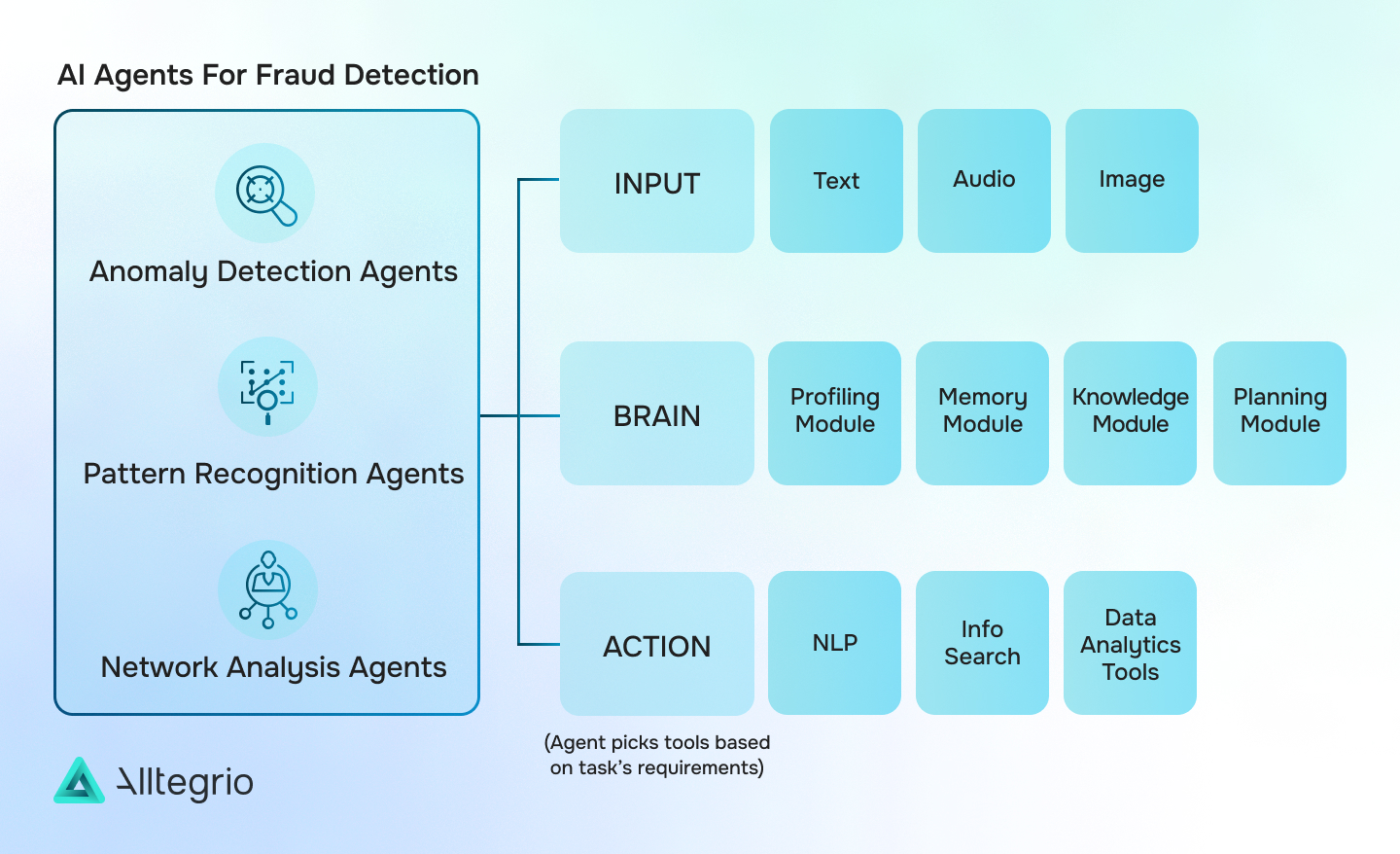
Let’s start by defining what exactly AI fraud detection is. It’s the use of Artificial Intelligence technology to identify and prevent fraud through a variety of means. Those include a range of methods, such as Machine Learning algorithms, Natural Language Processing (NLP), and Data Analytics services.

At a fundamental level, fraud detection AI is programmed to be superior in accuracy and efficiency compared to the traditional process. In contrast to conventional systems, which commonly rely on heuristics and static rules, AI-driven systems learn from constantly-flowing new data. Therefore, they can identify changing fraud designs extremely fast. This adaptable capability allows AI and fraud detection solutions to keep you one step ahead of the hackers.

One of the most substantial aspects of AI fraud detection is that it can analyze and process data in real-time. Therefore, it flags suspicious transactions immediately so you can investigate them directly. For example, in the fintech & banking sector, fraud analytics Machine Learning tools monitor transactions identifying unusual patterns, such as a sudden increase in withdrawals from a certain account or transactions originating from geo-locations of high risk. These proactive measures not only reduce the losses from fraud but also prevent it in the long run.

Also, banks are not the only institutions that can use fraud prevention AI. Online stores, insurance companies, and even social media platforms use these tools to safeguard their businesses. By applying advanced algorithms that monitor user activity, you can detect account takeovers, payment fraud, and even fake reviews.

As AI technology continues to evolve, fraud detection using Machine Learning and other advanced technologies will only grow in demand. With more sophisticated techniques, such as Neural Networks and Deep Learning, increasingly employed to better identify nuanced fraud patterns, AI fraud detection solutions will become necessary for every business.

block-image

How Does AI Fraud Detection with Machine Learning Work?

Machine Learning is a fundamental subcategory of AI development services and an essential element of AI fraud detection solutions. ML algorithms learn to detect patterns from historical data, recognizing both genuine and criminal transactions. The algorithms can subsequently analyze live data, flagging suspicious behavior for investigation.

So, fraud detection using Machine Learning usually follows these steps:

  • Data Collection
    Gathering data regarding the problem at hand from various sources.
  • Data Preparation
    The data is then scrubbed of inconsistencies and prepared for analysis.
  • Model Training
    Machine Learning algorithms are trained on this preprocessed data so that AI can learn from past instances of fraud. Data sources could include transaction history, user behavior data, and even external environment databases that track known fraudulent accounts. By incorporating a blend of diverse information, the models can learn to better understand the nuances of genuine and suspicious transactions.
  • Model Deployment
    Once deployed, fraud detection Machine Learning solutions can screen new transactions in real-time, scoring them on the likelihood of fraud. Transactions that exceed a certain threshold are flagged for review, allowing you to respond promptly.

Do not forget that ML algorithms’ adaptability enables them to learn and refine themselves over time. As new types of fraud emerge, the models can be retrained with new data so they remain effective at stopping evolving fraudster behavior.

In essence, fraud prevention AI works similarly to equipment failure prediction models that we’ve discussed in this article. The difference is that the ML models are trained to identify potentially fraudulent transactions instead of machinery malfunctions. Also, it’s important to note that fraud analytics Machine Learning tools are usually cheaper to implement than preventive maintenance solutions because they don’t require Computer Vision components or complex hardware infrastructure of sensors and IoT devices.

Who Needs to Use AI Fraud Detection?

Implementing fraud detection AI is essential for many industries, particularly those that handle high volumes of transactions or sensitive customer information. Foremost adopters of this technology are:

  • Financial Institutions
    Businesses such as banks and credit card companies must rely on fraud prevention AI to combat security issues effectively. ML algorithms allow these organizations to analyze transaction patterns in real-time, identifying anomalies that may reflect fraudulent activity. This proactive approach helps minimize losses and instills customer trust because clients feel more secure knowing that the most up-to-date technology protects their financial data.
  • Retailers and E-commerce Sites
    These sectors are typically plagued by chargeback problems, identity theft, and policy fraud. Therefore, AI and fraud prevention tools can be highly efficient for them. For instance, e-commerce sites can use AI to track user behavior, notifying them of suspicious activities like fire-sale purchases or mismatched shipping addresses. 
  • Insurance Providers
    Insurance companies can analyze claims data for trends that may signal fraudulent claims, allowing them to launch investigations before making payments. See what else AI can do for processing insurance claims in this case study.
  • Healthcare Businesses
    The healthcare industry is also quickly seeing the importance of AI fraud detection. With patient records and billing increasingly digitized, healthcare providers are vulnerable to fraud like billing for services not rendered or identity theft via patient information. AI fraud prevention tools help detect such anomalies and ensure that healthcare funds are allocated effectively and ethically.

In essence, any business that processes payments online or receives personal information should consider integrating AI fraud detection solutions on some level. With cyber-attacks growing in sophistication, the need for smarter fraud prevention AI solutions has become critical. By embracing these tools, you can not only protect your business from financial losses but also glean valuable insights into customers’ behavior.

Protect against fraud using AI

Protect your business from ever-evolving cyberthreats using custom-made fraud detection Machine Learning models.

Contact Alltegrio

How to Implement AI Fraud Detection in Your Business?

Implementing AI fraud detection must be a strategic undertaking. The best way to start is by engaging an AI strategy consulting service, so experienced professionals can help you build the most effective implementation plan. The process of integrating an AI fraud detection solution will usually go as follows:

  1. Assess your organization’s specific needs to understand what types of fraud you are most vulnerable to. This will dictate the technologies and methodologies you implement. For example, banks and other financial institutions would consider transaction anomalies, while e-commerce sites would focus more on user behavior analysis. Understanding these differences allows for a more targeted implementation that significantly reduces potential losses.
  2. Build solid data collection and management systems. AI fraud detection is only as reliable as the data quality fed into the algorithms. Ensure your data is comprehensive, up-to-date, and free from any bias that could skew results. That could involve consolidating various data sources, such as customer transaction history, behavior analytics, and external data like credit scores or social media behavior. Reliable Data Science services are essential to any effective AI and fraud prevention solution.
  3. Choose the right fraud detection Machine Learning models. Working with Alltegrio’s AI specialists will ensure that algorithms are tailored to your business context. The models must be continuously monitored and refreshed to stay current with emerging fraud patterns.
  4. Foster a culture of cooperation between your IT, security, and compliance departments. These departments can stay abreast of the latest fraud trends and AI advancements through routine training sessions. By offering clear communication pathways, you can ensure that anything out of the ordinary is reported and addressed promptly.
  5. Consider the ethics of AI in fraud detection. Employ explainable AI to demystify the decision-making process so stakeholders can understand how specific actions are rendered.

Benefits Businesses Get Using AI Fraud Detection Machine Learning Solutions

  • Lower Fraud-Related Losses
    By detecting and addressing fraudulent activities early, businesses can safeguard their assets and maintain customer trust.
  • Boost to Operational Efficiency
    AI fraud detection systems can sort through vast amounts of data faster than human investigators, allowing for real-time decisions. This saves time and allows staff to focus on higher-order tasks instead of conducting manual fraud investigations.
  • Improved Customer Experiences
    By reducing false positives (when legitimate transactions are incorrectly flagged as fraud), companies can also reduce consumers’ frustration and enhance satisfaction. This tradeoff between security and user experience is essential for long-term customer loyalty.

Disadvantages of Using AI Fraud Detection with Machine Learning Algorithms

  • One of the biggest issues with fraud detection AI systems is the possibility of false positives. For example, honest transactions might be wrongly flagged as fraudulent, which can cause customer discontentment and business loss.
  • Using historical data for model training can introduce biases into the ML models. The system cannot detect new fraud patterns if the training data does not reflect the most recent trends. Continuous updates and model retraining are necessary to avoid this risk.
  • The application of AI-based fraud detection solutions can be expensive. Your business could face significant costs for advanced technology, skilled personnel, and periodic maintenance. A balance between cost and the need for effective fraud prevention is vital.

block-image

How to Make an Effective Fraud Detection AI Strategy?

Designing an effective AI fraud detection strategy involves several key components:

  • Define specific goals that align with your business objectives. 
  • Determine what frauds you need to detect and what tolerable risk levels are.
  • Facilitate cross-departmental cooperation.
    Fraud detection is not an activity for the compliance or IT department alone. It requires the effort of finance, operations, and customer service departments to adopt a balanced perspective.
  • Invest in constant staff training and development.
    Training your staff on the latest fraud prevention AI innovations, criminal schemes, and detection mechanisms will make your people more effective at identifying and responding to potential threats.

AI and Fraud Prevention Use Cases and Real-Life Examples

There are a number of real-world practical applications of AI fraud detection in various industries. The following are examples from some of the leading fintech and payment processing providers in the world. Each of them has publicly acknowledged that they are using AI and fraud prevention solutions at some levels of their operations:

  • Visa
    Visa is spending $3 billion on AI investments and using an AI-powered Advanced Authorization system, among other innovations, to secure their client’s payments and personal data.
  • PayPal
    PayPal has acquired several tech startups that help them develop efficient and proactive AI fraud detection and prevention solutions. Being one of the most innovative in this area allows PayPal to offer highly secured payments in our digital era, which gives them a huge advantage globally.
  • Stripe
    Stripe has recently reached $91.5 billion in valuation, making it a standout even among fintech unicorns. We can believe that their focus on using fraud prevention AI is a big component of this success. It’s public information that Stripe is collaborating directly with NVIDIA to promote their AI capabilities in securing payments on every level. They currently use a highly effective Radar fraud detection Machine Learning solution to protect their client’s money.

How to Protect Your Business with AI and Fraud Prevention Solutions?

In conclusion, we’d like to highlight again how AI fraud detection is essential for businesses that want to protect themselves and their clients. By understanding how it works, its benefits, and how to adopt it, you can establish robust defenses that protect your assets and enhance customer trust.

As fraud tactics continue to evolve, it is critical that you stay vigilant and nimble when fighting these threats. Investing in AI fraud prevention is not merely a technology upgrade but a strategic necessity in the digital economy.

If you are ready to take the steps necessary to build up your fraud detection AI and other defenses, contact Alltegrio experts by filling out the form below.

Subscribe to our blog!