Overview
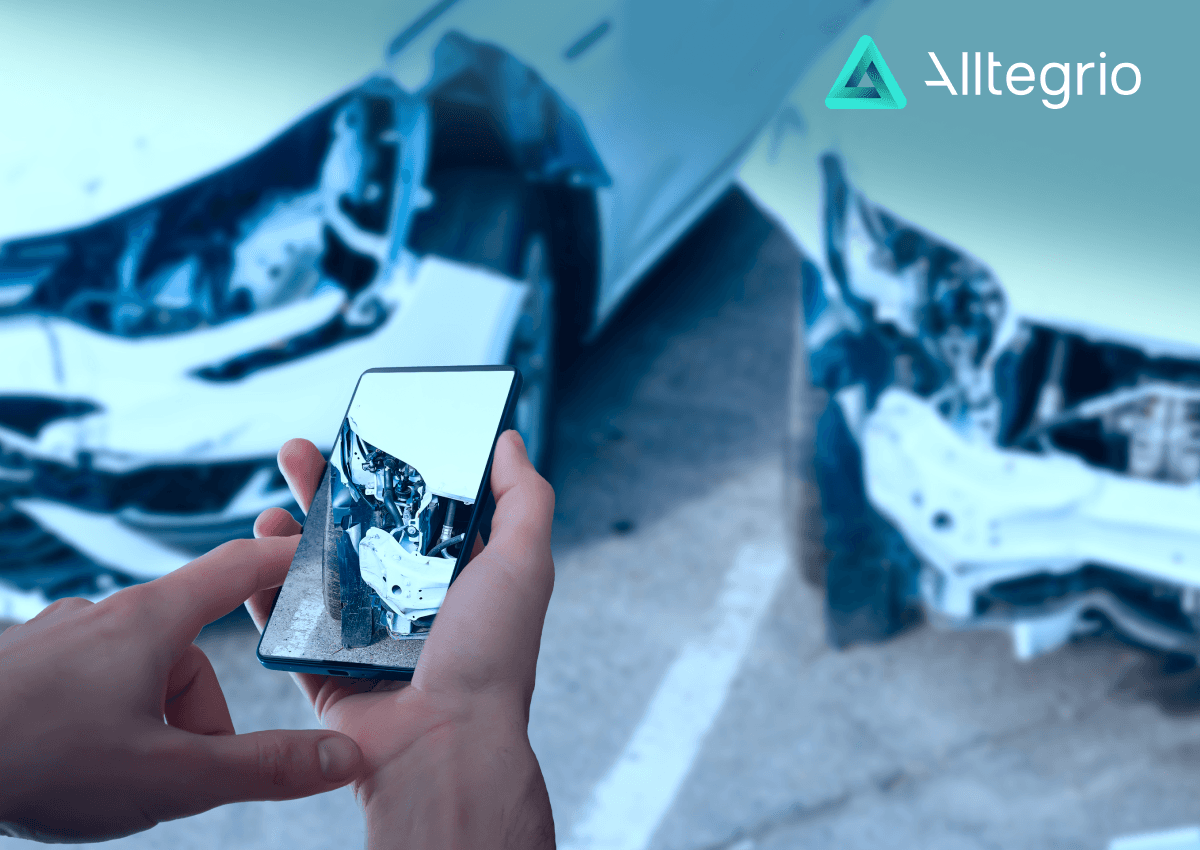
Our client is a US insurance company. It wanted to bring AI into its process for low-value vehicle damage claims. An in-person inspection takes hours and adds cost to small claims. The goal was a solution that reads the photos a customer uploads and prepares a first assessment of the visible damage, so adjusters spend their time on the claims that need them.
Solution
We built an image labelling and machine learning pipeline sized for high volumes. It starts with data annotation: vehicle photos are labelled by region, vehicle type, manufacturer and damage type, with pre-labelling by models and review by annotators. The pipeline is designed to take more than 1 million images per week, and over the project more than 1.5 million images have been annotated.
The labelled data trains models, built with TensorFlow and PyTorch, that detect damage on the photos customers upload. Custom Python scripts distribute data between labelling, training and the client's systems, and the data is kept in a secure cloud environment with encrypted storage.
Technology Stack
Features
- Photo-based damage assessment: a first assessment of visible damage from the customer's photos, which reduces the need for in-person inspections on low-value claims.
- High-volume labelling: the annotation pipeline is designed for more than 1 million images per week.
- Detailed image labelling: regions of interest labelled with vehicle type, manufacturer and the specific type of damage.
- Model quality checks: each model version is tested on held-out labelled images before release, and the models are retrained as new labelled data arrives.
- Claims integration: model assessments are compared with the repair receipts submitted with a claim.
- Custom tooling: Python scripts and annotation tooling for moving and checking data at volume.
- Room to grow: the pipeline can be extended to other insurance products and claim types.
- Security: encryption in transit and at rest, and access limited to the people working on the project.
Outcome
- Over 1.5 million images annotated for training and testing
- Low-value claims get a first damage assessment without waiting for an inspector
- Adjusters move from routine photo review to complex and disputed claims
- A base for extending the solution to more types of insurance
- Customers get an answer on simple claims sooner
images per week the labelling pipeline is designed for
of continuous work with the client
How We Build Photo-Based Damage Assessment
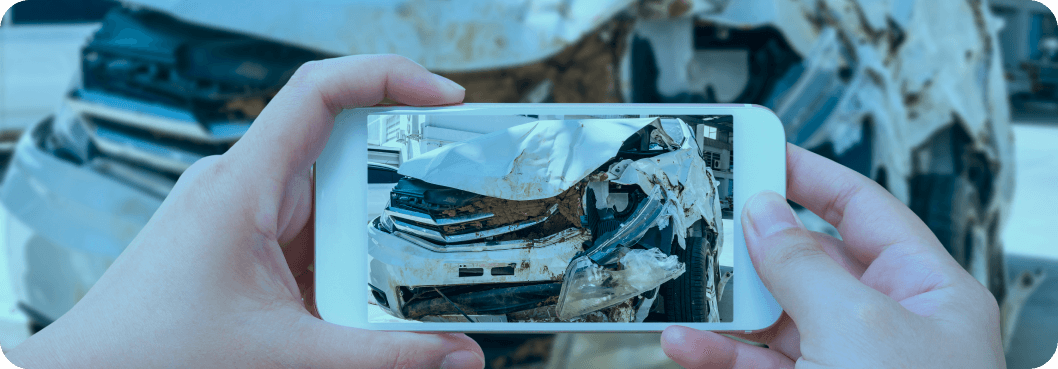
A claims photo is taken by a customer with a phone, in a car park, in whatever light there is. Our damage assessment pipelines are built around that reality:
- Capture guidance. The upload flow asks for specific angles and checks each photo for blur, glare and distance before accepting it, so a poor image is retaken while the customer is still at the car.
- Vehicle and part identification. Models identify the vehicle and segment its panels, so damage is attached to a named part instead of a patch of pixels.
- Damage detection. Segmentation models trained in PyTorch mark scratches, dents, cracks and broken glass, and estimate severity for each part.
- Repair logic. Damage per part is mapped to a repair or replace decision and to labour and parts data, which produces a draft estimate.
- Confidence routing. Low-confidence images, high estimated costs and unusual damage go to an adjuster. Only clear, low-value claims move forward without review.
- Feedback loop. Adjuster corrections are stored with the image and used in the next training round.
On current projects labelling runs in CVAT with written guidelines for each damage type. The customer-facing flow and the adjuster review screens are built on a TypeScript stack with Next.js and Node.js and connect to the insurer's claims system through its API.
Where Automation Stops in Claims
Photo models are good at visible surface damage. They cannot see a bent subframe, a cracked sensor bracket behind a bumper or a fault that only shows up in a diagnostic scan. An automated estimate is a first view of the visible damage, and the claims process has to define when a physical inspection is still required.
Image authenticity is now a second problem. In the Verisk State of Insurance Fraud study, published in March 2026, 36% of surveyed US consumers said they would consider digitally altering a claim image or document, and 98% of surveyed insurers agreed that AI-powered editing tools are driving a rise in digital fraud. A damage model will read an edited photo as confidently as a real one.
That changes the design. We put checks for metadata, reused images and signs of editing in front of the damage model, and keep a human decision for any claim where those checks or the model's confidence raise a flag. Coverage questions, disputed liability and total-loss calls also stay with adjusters. See our computer vision development and insurance pages.