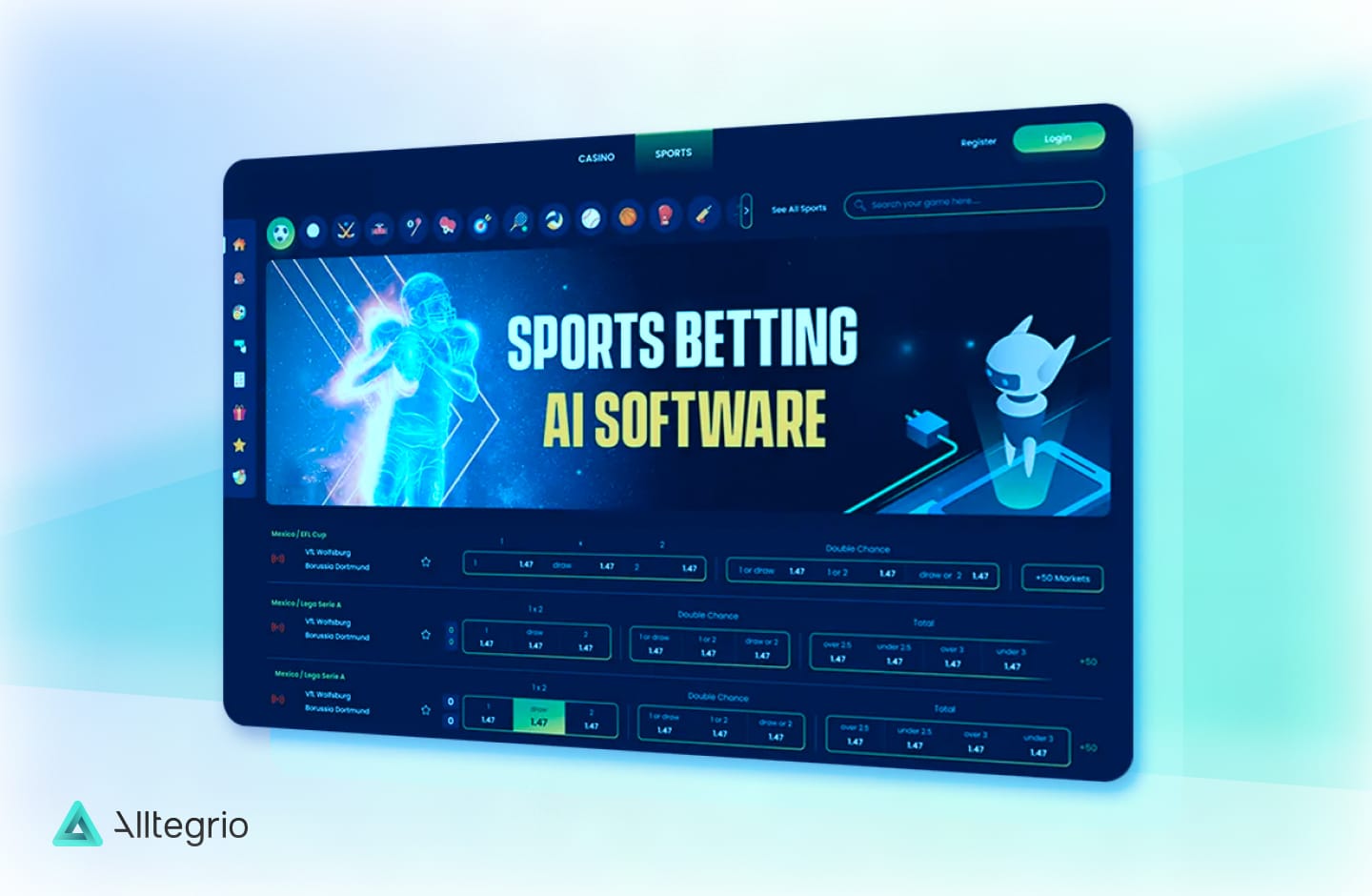

Football coaching software turns match video, tracking data and training-load data into information a coach can act on: which patterns conceded chances, which players are carrying too much load, which opponent weakness is worth training for this week. AI coaching assistants add a layer on top: they tag video automatically, model tactics, and answer staff questions about the club’s own data in plain language.
In this article, we explain what these tools are, what data they run on, where AI helps and where it is still weak, and what to plan when building or adopting one. For examples of the data work behind sports analytics, see the projects Alltegrio developers delivered:

What Are AI Coaching Assistants and Football Coaching Software?
Football coaching software is the set of tools a club uses to plan training, analyze matches and monitor players. An AI coaching assistant is the part of that software that uses machine learning and language models to do analysis work automatically: it detects events in video, models tactics, flags players at risk of overload, and answers questions from the staff. Such tools are built through data analytics, AI development and machine learning development, wrapped in an interface a coach can use between sessions.
The Data Behind Football AI
Every football AI tool depends on one or more of four data sources:
| Data source | What it records | How it is collected | Typical uses |
|---|---|---|---|
| Event data | Every on-ball action: passes, shots, tackles, with location and outcome | Human taggers, increasingly assisted by computer vision | Match reports, expected goals (xG), passing networks, scouting |
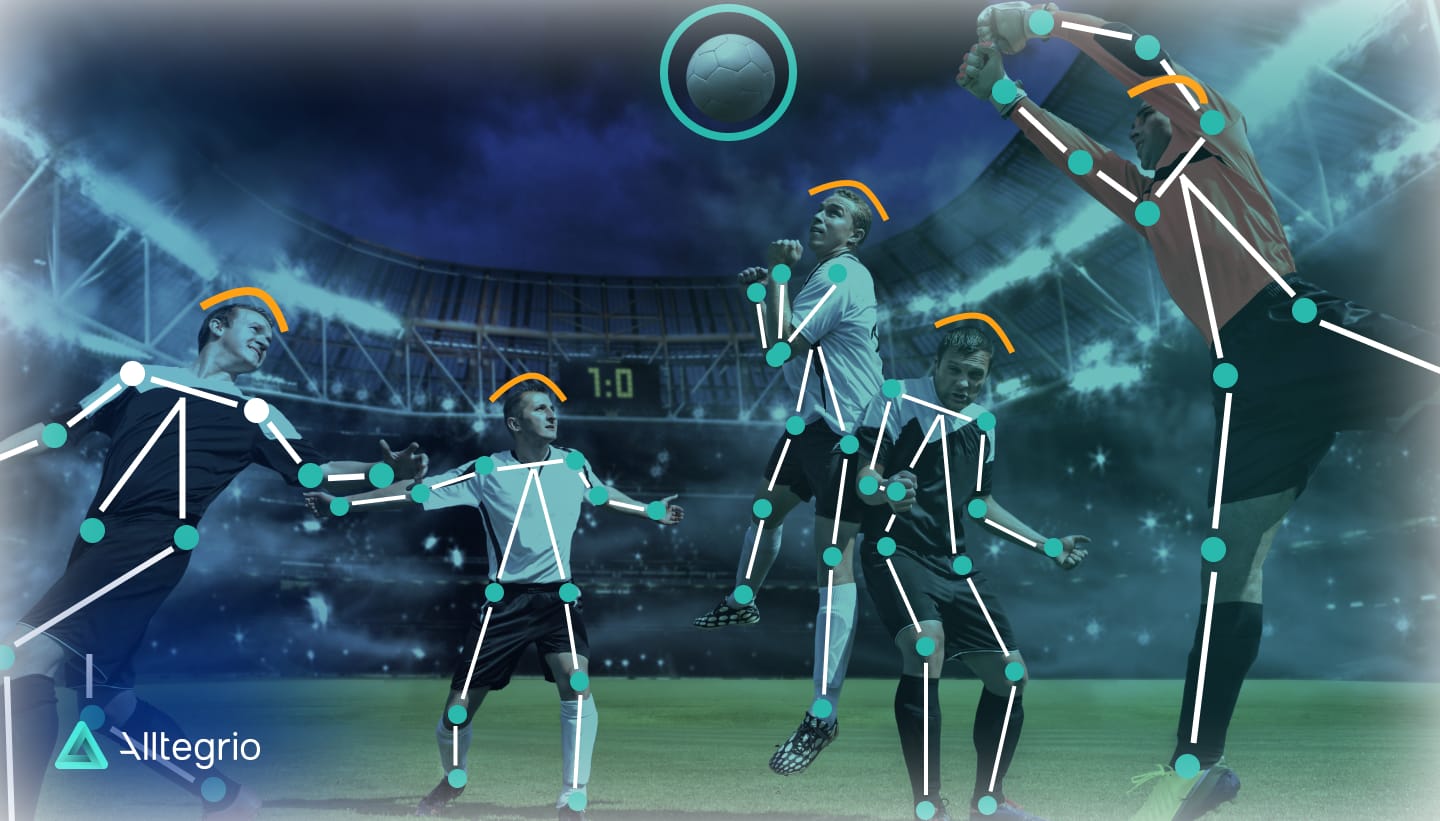
| Tracking data | Positions of all players and the ball many times per second | Optical camera systems in stadiums, or computer vision on broadcast video | Pressing, space control, team shape, physical output |
| Wearable data | Distance, speed, accelerations, heart rate | GPS and inertial sensors worn in training and matches | Training load, return-to-play, fitness |
| Video | The footage itself | Match cameras, tactical (wide-angle) cameras, training cameras | Clips for players, automated tagging, opponent analysis |
Expected goals is a good example of what the models do with this data. An xG model estimates the probability that a shot becomes a goal from its distance and angle to goal, the body part used and the type of assist, trained on many thousands of past shots; more advanced models add the positions of the goalkeeper and defenders. Different models use different inputs, so the same shot can get different xG values. Summed over a match, it shows whether a result reflected the chances created or luck. Public event data such as StatsBomb Open Data lets analysts and developers build and test such models before buying a commercial feed.
What AI Adds
On top of the data, AI performs four kinds of work:
- Perception. Computer vision detects and tracks players and the ball in video and recognizes events, which turns hours of manual tagging into a review task. Human annotation is still needed to create training data and check output.
- Prediction. Models estimate probabilities: of a shot becoming a goal, of a pass succeeding, of a player’s load reaching a level linked to injury in that player’s history.
- Tactical modeling. Models represent a game situation as players and their relationships and suggest changes. The best-known example is TacticAI, built by Google DeepMind with Liverpool FC. It represents a corner kick as a graph of players, predicts who will receive the ball and whether a shot will follow, and suggests repositioning players. In a blind evaluation, Liverpool’s experts preferred its suggested setups over the real ones 90% of the time. The study covered corner kicks only, and was not a test in live matches.
- Language interfaces. Assistants built on large language models let staff ask “how did our left side defend crosses in the last five away games?” and get an answer with linked clips, drawn from the club’s own data rather than general knowledge.
Simulation tools let coaches enter a match situation and see suggestions about weaknesses in the opposing setup or about player positions, which they judge against their own knowledge of the team. Combining video and tracking also makes feedback to each player specific: a clip of the moment, the positions, and what the alternative was.
Software also changes the conversation between coaches and players. When players can see their own training plans, clips and performance data, they can follow their development between sessions. That works best when the data is presented with context from the coach, not as raw numbers.
What Types of Football Coaching Software Exist Today?
There are many online tools for football coaches and clubs. They fall into four main categories:
- Performance Analysis Software
Performance analysis shows coaches what actually happened on the pitch, beyond what they remember from the touchline. These tools combine video with event and tracking data: the coach filters for, say, every opposition counterattack after losing the ball in midfield and gets the clips with the numbers. AI shortens the work by tagging events automatically and highlighting key moments, such as sequences that led to goals or big chances. - Tactical Analysis Tools
These focus on team shape and opponents. Typical outputs are heat maps, average positions, passing networks, pressing intensity and pitch control (which team controls which area at each moment, calculated from tracking data). Opponent reports built from these show patterns such as where a team builds up and which side it presses, which coaches then rehearse in training. - Fitness and Health Monitoring Systems
These track training load from wearables (distance, high-speed running, accelerations) and from players’ own wellness reports, and compare it with each player’s normal range. Staff use them to plan training and manage return to play and to reduce injury risk. Injury-prediction models should be treated with care: injuries are rare events with many causes, and models built on one squad’s data have limited reliability. They are useful as an alert for staff to look closer, not as a forecast. - Game Management Software
These support decisions during matches: live physical data, event stats and clips available on the bench. Under the Laws of the Game, wearable tracking systems must meet FIFA Quality Programme requirements, and team officials may use small handheld devices in the technical area for tactical or player-welfare purposes. Competition rules on what can be used live vary, so clubs check them for each competition.
How You Can Use Online Tools for Football Coaches
Football coaching software is used in three main ways: analysis, communication and recruitment.
- Delivering Soccer Analytics
The coach loads match footage and data and gets reports on player movement, tactics and team performance. A practical weekly cycle: post-match review on the first day, opponent analysis by midweek, training sessions built around the two or three patterns that matter, and a short clip pack for each player. Breaking complex plays into short clips with positions marked makes ideas easier to explain. - Improving Communication
Coaching platforms make communication between coaches, players and support staff easier. Coaches share video clips, training schedules and individual targets, and players see them on their phones. Many platforms include messaging for quick feedback after sessions. - Scouting and Recruitment
Clubs use event and tracking data to build shortlists: players whose numbers fit a role profile, adjusted for league strength and team style. Video then confirms or rules out each candidate, and scouts watch in person before a decision. The data’s main value is coverage: it surfaces players in leagues the club cannot scout regularly. Its main limit is context: the same statistics mean different things in a dominant team and a struggling one.
Why Coaches Must Pay Attention to AI Performance Analysis in Sport
AI performance analysis matters because it gives coaches evidence where they previously relied on memory and impression, and it does so quickly enough to use within a week.
- Football margins are small. Data shows patterns in a team’s own play and in opponents’ play that are hard to see live, such as where chances are conceded or which build-up routes break down. Coaches still decide what to do about them.
- Players respond to concrete feedback. A clip with positions and a clear target is easier to act on than a general comment. In this sense, these tools can act as personal AI trainers for athletes.
- Training can be individualized. Load data and development targets let staff adjust sessions to each player: more volume for one, recovery for another, specific technical work for a third. This helps young players develop and keeps experienced ones motivated.
The tools also have limits a coach should know. Data quality varies by competition, especially below the top leagues. Metrics can be gamed or misread without context. And a model trained on one league’s patterns may not transfer to another.
How to Develop Effective AI Football Coaching Software
Building AI-powered football coaching software starts with the data and the users, then the models. The main decisions:
- Outline your exact requirements
Interview the people who will use it: head coach, analysts, fitness staff, scouts. List the questions they answer every week and how long each takes now. These become the first features and the measure of success. - Secure the data
Decide which sources you need (event, tracking, wearables, video), whether to buy them from a provider or produce them yourself with computer vision and data annotation, and how they will be joined: players, matches and timestamps must line up across sources. - Build and evaluate the models
Start with established methods (xG, load monitoring, automated event detection) and measure them against labeled data from your own competitions. For event detection, measure precision and recall per event type; for predictions, check calibration, meaning that events predicted at 30% happen about 30% of the time. - Prioritize user experience
Coaches do not have much time to learn new software, so the interface must be uncluttered with quick access to the important views. Visualizations such as heat maps, pitch plots and short clip playlists make data easier to read. That is why football coaching software development usually includes data science and visualization services. - Think about compatibility and integrations
Staff use laptops, tablets and phones, often at the training ground or traveling. The software has to work on all of them and integrate with the video and wearable systems the club already uses. - Plan for privacy and security
Player health and biometric data is sensitive. In the EU and UK, data concerning health is a special category under the GDPR, which requires a specific legal basis and strict access controls. Players should know what is collected and who sees it.
How to Integrate Football Coaching Software into Your Team
Rolling out coaching software has to be planned. These steps make it smoother:
- Explain the purpose. Tell players, coaches and management what the software is for and what it is not for: for example, load data is used to plan training, not to judge effort in public.
- Train the users. Workshops, short tutorials or one-to-one sessions for coaches and players, with a named person to ask when something does not work.
- Phase it in. Start with one use, such as post-match review or load monitoring, for a few weeks. Adjust based on what the staff find useful, then add the next.
- Review after a set period. Check whether the analysis takes less time, whether staff use the reports, and what they ignore, and change the product accordingly.
What Are the Benefits of Using Online Tools for Football Coaches?
The main benefits are better-informed decisions, clearer communication and time saved on analysis:
- Data and video give coaches evidence to weigh alongside their experience and intuition, which helps settle questions such as which tactical pattern is actually causing problems.
- When players and staff see the same clips, data and comments, it is easier to build trust and accountability.
- Automated tagging, data collection and report generation free analysts and coaches from manual work, so more time goes into planning training and working with players.
- Load monitoring helps staff manage training volume across a long season and plan return to play after injury.
Who Should Invest in Football Coaching Software?
Football coaching software is useful at every level, from academies to professional clubs, as long as its scope matches the club’s staff and budget. A professional club with an analysis department can use tracking data and custom models; an academy may get most value from video, wearable data and a simple way to share clips and targets with players.
The practical starting point is the data and video the club already collects. Pick one recurring task that takes the staff too long, such as tagging matches or preparing opponent reports, measure how long it takes now, and automate it first.
Contact Alltegrio to discuss an AI-powered product for your club or sports business, or the labelling and review of your own match footage for performance analysis. More on this area is on our sport and wellness page.