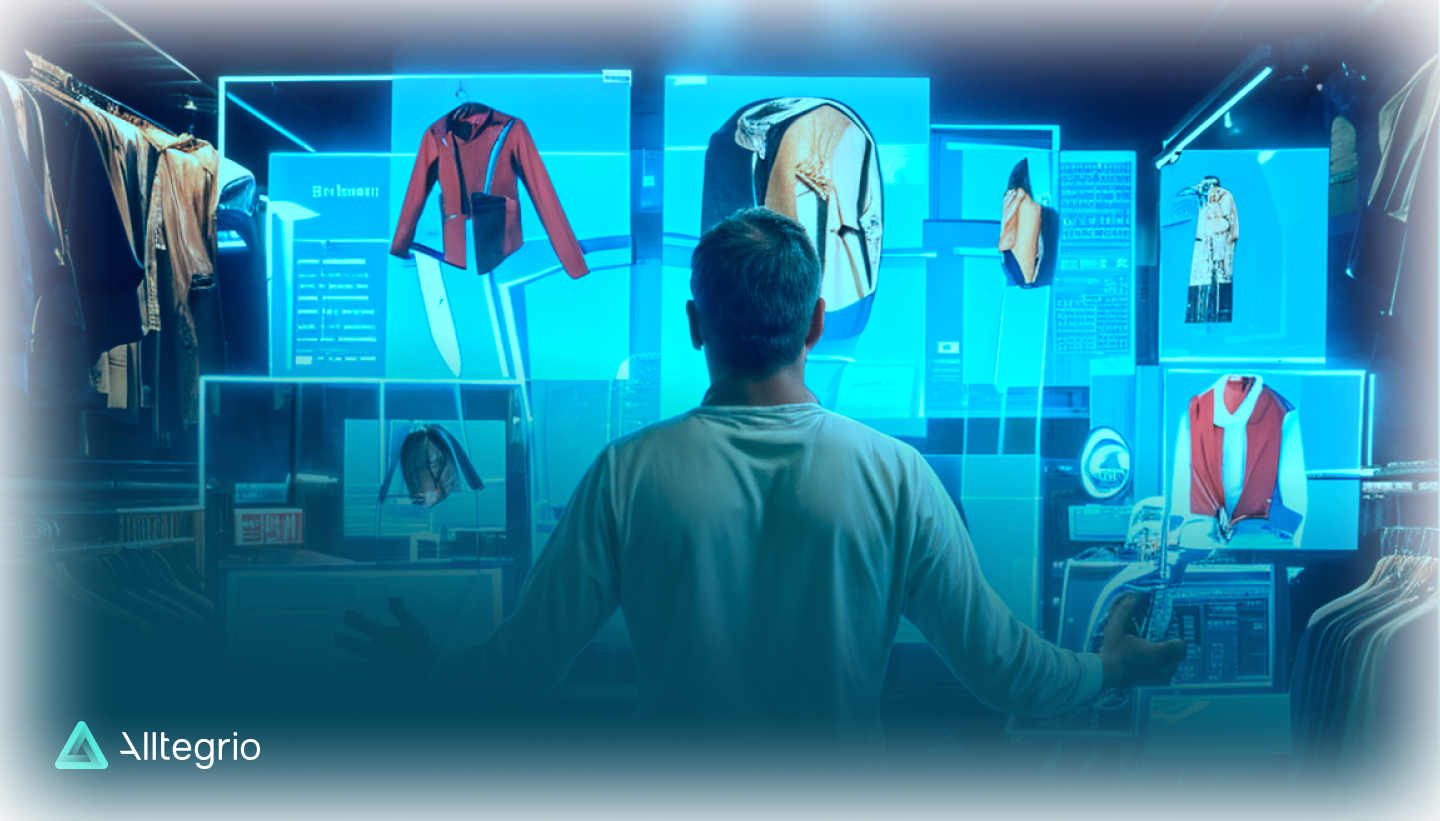
The world of e-commerce is growing rapidly, and technological advancements have had a huge impact on this development. One of the most innovative applications in this realm is Computer Vision tech. It’s an area of Artificial Intelligence that enables machines to interpret and make decisions based on visual data.

In this post, we’ll talk about the many applications of Computer Vision for online store management and revenue growth. The Alltegrio team has experience in developing AI-powered solutions that optimize multiple processes in retail management and marketing. However, most importantly, we will share with you the scope of opportunities offered by creative applications of Computer Vision models.

Computer Vision for eCommerce: How to Use It?

As our world becomes increasingly digital, e-commerce is fast replacing traditional shopping. According to Statista, e-commerce sales figures already exceed $4 billion, and this number will keep growing. Computer Vision can be applied in several ways within this industry. The ultimate of these is using AR and VR technologies to make the online shopping experience as close to real life as possible.

Other common ways to use Computer Vision solutions in online stores include:

  • Product Categorization
    Embedding image recognition software into your system would enhance product categorization, inventory management, and user interaction. Using algorithms capable of detecting and classifying products by their visual appearance guarantees businesses the ability to offer better purchase experiences to customers.
  • Better Product Search
    Computer Vision enables visual searches. Customers can upload images of desired items and see similar things for sale. This makes shopping easy and helps customers get inspiration from images rather than text-based searches.
  • Virtual Try-Ons
    Most importantly, Computer Vision feeds the Augmented Reality technology, allowing your customers to try the products virtually. This can be integrated with a variety of recommendation systems to fit various niches, from clothing to cosmetics retail. Check out this case study to see how the Alltegrio team created such a solution for a cosmetic retailer. The tool features ChatGPT integration and Computer Vision AI. Therefore, it can generate skincare recommendations for buyers and suggest products that fit those recommendations.

block-image

How Can Computer Vision Be Used for an Online Store?

Computer Vision solutions allow retail and e-commerce businesses to optimize visual presentation, save hours in regular checks of the state of supplies, and provide more engaging end-user interactions. This technology is very powerful and versatile. Therefore, you need to be sure you understand its full potential in e-commerce applications if you want to get the most value out of your AI Computer Vision investment.

Application Tech Details Benefits
Search Enhancement Replacing text input with videos or images Visual search enhances customers’ shopping experience and helps them find exactly what they are looking for, reducing frustration and increasing conversion rates.
Inventory Tracking Cameras powered by Computer Vision and sensors track items within the warehouse A retail business can maintain optimal inventory levels and avoid stockouts. It can also analyze product placement and shelf organization to gain insight into consumer behavior and preferences. For instance, if certain items consistently sell out faster than others, stores can adjust their stocking strategies accordingly, ensuring that popular products are always available to meet demand.
Personalized Shopping Experiences Visual recognition of customer-product interaction on websites Using AI for behavioral analysis on the website helps provide visitors with personal recommendations based on their history and preferences. Moreover, Computer Vision AI powers AR features, enabling customers to see what a product will look like in their environment before buying, further bridging the gap between online and hands-on shopping.
Quality Control Cameras, sensors, and Computer Vision solutions designed to identify and track items Image recognition algorithms automatically allow retailers to check the state of items when they reach warehouses or are packed for shipment. This will ensure that only items meeting quality standards are shipped to customers, reducing returns and improving brand reputation.


How Are Computer Vision Solutions Used to Identify an Order and a Client?

Correct identification of the order and customer is paramount in e-commerce. Computer Vision solutions can be used in package recognition and customer authentication at the fulfillment stage. With image recognition techniques, it will be easy for the business to verify the order’s contents and if the correct products are packed for delivery. This not only minimizes the chances of errors but also smoothes out the logistic process.

As a result, your business can offer shorter delivery times to your clients. In addition, you get to optimize resource and space management. Therefore, you reduce waste to a minimum, ultimately increasing profitability.

In addition, facial recognition technology will make shopping more pleasant in-store and online. For example, online retailers can analyze customer images to make personalized recommendations and offer targeted promotions to enhance their engagement and satisfaction. AI Computer Vision technology can be used to develop a safer shopping environment because it can identify habitual customers and fraud.

Moreover, by integrating Computer Vision into CRM systems, businesses can gain keen insights into customer preferences and behaviors to improve the effectiveness of their marketing strategies.

Offer visual search to your customers

Let your customers search for items they want using pictures instead of words. Increase conversions and boost customer loyalty implementing Computer Vision AI.

Contact Alltegrio

How Can Computer Vision Be Used for Warehouse Operations?

Computer Vision solutions are invaluable tools for optimizing workflows and improving the safety of warehouse operations. Cameras with sophisticated Computer Vision models will monitor the warehouse for proper inventory storage, picking accuracy, and timely shipping.

By utilizing real-time visual tracking, businesses can enhance the efficiency of their supply chains. For instance, automated guided vehicles (AGVs) can navigate warehouses while avoiding obstacles, thus streamlining the process from stock arrival to order fulfillment.

Moreover, implementing Computer Vision AI can significantly reduce human error in inventory management. By applying image recognition technology, systems can automatically identify and categorize products upon receipt to ensure the right item is in the right place. This not only accelerates the inventory process but also minimizes the risk of misplaced goods that can lead to costly delays and customer dissatisfaction.

Integrating Computer Vision with Machine Learning development allows you to use Predictive Analytics. For example, a warehouse can estimate supply reordering before stock levels reach a critically low level, sustaining business operations without disruption.

Another interesting example of Computer Vision applications in the warehouse is safety monitoring. This tech can detect unsafe behaviors and hazardous conditions, such as a worker not wearing safety gear or improper use of equipment. The system can alert the management to take action instantly. This proactive approach helps to create a safer working environment, given the employee’s power over safety regulations to protect both assets and employees

As these technologies continue to advance, we expect to see a great deal of innovation in operational efficiency and safety in the warehouse environment using Computer Vision. If you want to learn more about the uses of AI in warehouse management, check out this article.

How Can Computer Vision Solutions Help Make Order Delivery More Efficient?

Delivery is the most critical touchpoint in a customer’s journey with an online store. Implementing Computer Vision can offer significant improvements in this area, especially in helping to ensure the transportation safety of the cargo and driver. More ways to implement Computer Vision models for delivery optimization include:

  • Systems with image recognition can compare real-time images against order specifications to load the correct items onto the delivery vehicles and reduce errors.
  • Computer Vision solutions are an integral part of drone delivery systems. They allow drones to navigate complicated environments by understanding visual information to avoid obstacles and perform safe landing protocols.
  • The use of Computer Vision AI together with GPS can optimize delivery routes, reducing time and fuel consumption and making your delivery model more sustainable.
  • The application of facial recognition and license plate scanning using computer vision to confirm the identity of recipients is extremely helpful at the last mile for order fulfillment.  The extra layer of security adds protection not only for customer data but also builds trust in the delivery service.

block-image

Which Computer Vision Solutions Are Used for Various Operations in E-commerce?

Several state-of-the-art Computer Vision solutions find their place in different e-commerce operations, including: 

  • Image Recognition: applied to identify products, categorize them, and improve search functions.
  • Facial Recognition: used to personalize customer relationships and secure access to customer accounts.
  • Automatic Quality Inspection: ensures product consistency and reduces manufacturing and fulfillment defects.
  • AR/VR Integration: offers immersive online shopping experiences by helping customers visualize a product in a real-world context.
  • Real-Time Inventory Tracking: allows stock positions to be maintained at optimal levels and updated in real-time within the system.

As the tech evolution moves forward, Computer Vision for online store management will continue revolutionizing the way we shop. In particular, the application of AR and VR technologies will change how customers interact with online products. These technologies are bridging the gap between physical and digital shopping experiences by allowing virtual try-ons or enabling customers to see how a piece of furniture would look in their living space. This immersive approach is the future of retail, and you definitely should get a jumpstart on offering your buyers this level of immersion. Otherwise, you risk being left behind by more innovative competitors.

What Do You Need to Know Before Implementing Computer Vision for E-commerce Businesses?

E-commerce businesses must consider a couple of things before partnering with a Computer Vision development company. First, you must decide on the exact areas you want to improve using this technology.

Another thing to consider is planning your initial investment. It can be quite hefty for some Computer Vision solutions because they require a significant hardware infrastructure. Such a solution usually includes high-resolution cameras, powerful processing units, and specialized software that can handle complex algorithms

Furthermore, you’ll need to plan for staff training in operating and maintaining such technologies. Your employees should be capable of interpreting the data from AI Computer Vision systems and troubleshooting them if necessary. If you choose to work with the Alltegrio team, we will provide assistance in training your staff to use the new solutions that will help take your business to the next level.

Ethics is another critical issue to consider when using Computer Vision in e-commerce. Privacy requirements demand that businesses comply with the relevant legislation for data protection. Being open and honest with customers is imperative to building trust between your store and customers. Data anonymization could prevent backlash or improve brand reputation by preventing users’ personal data leakage. By placing ethics first, an e-commerce business can avoid legal problems and be recognized as a leader in responsible business conduct in the technology-driven marketplace.

block-image

What Business Benefits Can Computer Vision Bring to E-commerce?

Implementing Computer Vision models in e-commerce can bring multiple benefits. The most notable of them are:

  • Improved operational efficiency
  • Reduction of human error
  • Process automation that saves time and money
  • Reduction of labor and transportation costs
  • Highly personalized customer experiences
  • Improved customer satisfaction
  • Better customer experiences with visual search
  • Optimized inventory management

Ultimately, businesses adopting Computer Vision AI technology can increase sales and reduce operational costs. This offers a significant competitive advantage in the cutthroat online retail market.

Apart from these benefits, Computer Vision tools can also provide advanced analytics and insights. By understanding customer behavior and preferences through image recognition, e-commerce platforms can optimize their marketing strategies accordingly.

For example, knowing which products are often viewed together can inform cross-selling opportunities. This data enables businesses to create targeted promotions that resonate with their audience.

Moreover, Computer Vision can play a major role in improving product quality and reducing returns. By analyzing images to ensure that products meet specified quality standards before shipment, businesses can reduce the likelihood of customers being dissatisfied with their purchases. This proactive approach will save you from the costs of returns and refunds.

Computer Vision Solutions in Real-Life eCommerce Examples

Many of the leading retailers have already recognized the potential of Computer Vision solutions. So, by investing in this technology, you have a chance to join the giants such as:

  • IKEA: IKEA has been using the Place App powered by Augmented Reality technology since 2017. It allows users to visualize how items will look inside their homes. The app was downloaded 2 million times in just the first year after its launch, and IKEA’s online sales grew by 2.9 billion euros within a year of Place App release.
  • Alibaba: Alibaba launched FashionAI and Hemo concept stores, which use Computer Vision tech to analyze shoppers’ behavior, offer outfit recommendations, and ensure seamless payment and customer identification. This ‘New Retail’ initiative brought a 42% revenue growth for Alibaba’s core commerce department.
  • Sephora: Sephora, a renowned cosmetics brand, launched Virtual Artist, an AR-powered solution for trying on makeup. According to the company’s reports, clients used the feature to try on millions of looks, and their conversion rates went up 2x times for some positions.

There are many more retail and eCommerce leaders using Computer Vision technology, including Amazon, Walmart, JD.com, etc. They aren’t as open with the numbers of how this tech benefitted their growth. However, we can see from their positions on the market that it definitely was a worthy investment in innovation.

Hire a Trusted Partner to Develop Computer Vision Solutions for E-commerce

The bottom line is that implementing Computer Vision can optimize every part of your e-commerce business in one way or another. Whether it’s enhancing customer shopping experiences or improving supply chain efficiency, you can use this tech to achieve your full business potential.

Selecting the right partner is the key to success when developing a successful and scalable Computer Vision solution. Are you ready to take this leap?

Contact Alltegrio by filling out the form below, and let’s see how we can transform your business with AI innovations.

Subscribe to our blog!