AI Development
Computer Vision
Data Analytics
Data Annotation
Generative AI
ML Development
Predictive Analytics
Sport & Wellness
In today’s competitive market, businesses must understand and address customer churn, and Predictive Analytics services are invaluable for this. With technological advancements, Generative AI emerges as a potent tool to predict churn, allowing organizations to devise strategies to retain customers. This article will explore essential aspects of customer churn and how Generative AI can aid in predicting it effectively.
Customer churn refers to a situation where customers cease using a company’s services. It happens to be one of the key metrics for any organization in several industries, as it directly affects your revenue and profitability. A grasp of churn is instrumental in devising strategies for improvement in customer satisfaction and loyalty.
High churn can indicate that something is seriously wrong with the company, such as poor customer service, a lack of utility in the product, or better competitors. For this reason, reducing churn is of paramount importance for most businesses.
It has to do with the other very important issue: customer acquisition cost. For most businesses, the process of acquiring new customers is far more expensive than existing ones. This is the reason why customer retention is not only an issue of maintaining a predictable stream of revenue. It is actually a strategic decision from a financial viewpoint. A company that takes a churn-reduction approach has better chances of optimizing resource allocation, thereby increasing efficiency in both marketing and operations.
Besides, the causes of customer churn may be indicative of market trends and consumer preferences. Analyzing customer lifecycle data may point to patterns that indicate a shift in customer expectations or the emergence of new competitors. This proactive approach lets companies adapt their offerings and improve their services, leading to a more resilient business model. Moreover, customer feedback and surveys could be a way to get the people’s loyalty because they feel their opinions are important and considered.
Generative AI uses sophisticated algorithms and predictive analytics tools to analyze available customer data, forecast behaviors, and even generate synthetic data where needed. Therefore, implementing those tools allows companies to address issues that lead to customer attrition and be proactive about it.
AI-driven models can identify patterns and correlations in customer behavior that may not be immediately visible to human analysts. In this way, predictive analytics enables businesses to craft effective marketing campaigns, enhance customer service, and develop targeted retention strategies.
Furthermore, generative AI solutions can create simulations of different scenarios based on historical trends. These can help businesses understand what various interventions may mean for customer retention. For example, by analyzing past interactions, AI may suggest personal offers or effective ways of communication that best resonate with a particular segment of customers. This not only increases the chances of retaining customers but also builds a better relationship between the brand and its customers.
Additionally, generative AI is used for purposes other than predictive analytics marketing. The technology will also contribute to creating a fascinating customer experience. By automatically generating insights into customers’ preferences and behaviors, businesses can create products and services that reflect the customers’ wants. This approach preempts churn and also makes the firm better prepared for market shifts, placing it ahead in the constantly shifting landscape.
Minimize customer churn and grow your revenue in the long-term.
Contact UsAccurate churn prediction is only possible by gathering and processing a variety of data sets. Major data types used in predictive analytics include:
Integrating these data types yields a complete landscape necessary for predictive analytics tools to function properly. However, background information about the context is also essential for AI. For example, demographic data can reveal trends on age groups or regions that account for the churning rates. In contrast, behavioral data analytics on websites can emphasize which particular actions lead to customers deciding to leave. Studying and analyzing these patterns will help businesses build more effective retention strategies.
Furthermore, one should consider the timing of data collection. Real-time data can present immediate insights into customer behavior, enabling companies to act swiftly upon potential churn signals. For instance, if a customer suddenly reduces their engagement with a product, timely intervention through personalized communications or targeted offers may help re-engage them before they decide to leave. Therefore, a dynamic approach to collecting and analyzing data enriches the accuracy of the forecast on churn and also helps businesses maintain better relations with customers.
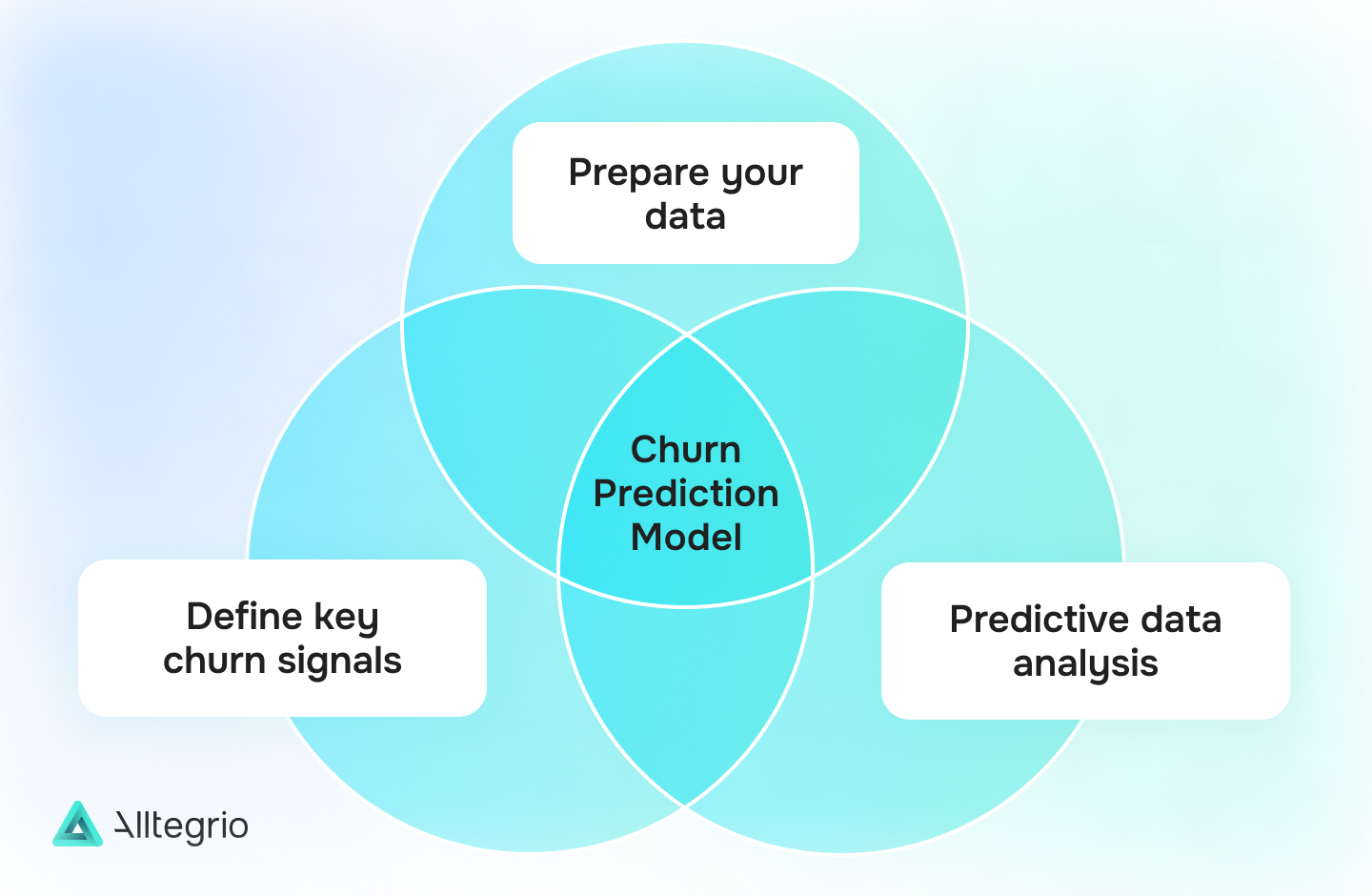
Training Generative AI models is a part of the more complex process of building an AI app. The steps most relevant to predictive analytics for business churn prediction include:
Following this process, a business can build strong models to predict churn. However, it’s crucial to fine-tune and update the models along with customer behavior and the ever-changing market conditions. Continuous updates will provide appropriate relevance to the models’ predictions. Integrating real-time feeds will make it react quicker in response to developing trends, which the model can identify as signaling eventual churn.
Moreover, the ability to utilize advanced techniques, such as transfer learning, could further improve the performance, particularly on limited datasets. Organizations can leverage various pre-trained models, fine-tune them on particular datasets, and perform better and with higher accuracy. These methods will make it much faster for prediction purposes and provide an avenue for better insight into customers for further business retention strategy optimization.
Some of the important performance metrics used by churn predictive analytics software are:
These metrics help organizations fine-tune their churn prediction. However, one must also consider the context wherever these metrics are applied. For example, in industries characterized by high customer churn, such as telecommunications or subscription services, high recall may be desired to ensure that most potential churners are targeted for retention strategies.
On the other hand, precision may be prioritized in sectors where retaining a smaller, high-value customer base is critical. This ensures that marketing resources are not wasted on customers who are unlikely to churn.
Furthermore, the interpretation of these metrics would depend on the purpose for which the model is intended. For instance, the thresholds of precision and recall may differ for a model that predicts churn for a new product launch versus a model intended for an established service.
Many organizations run experiments to find the right balance among these metrics, adjusting their models and strategies based on real-world feedback and performance data. This iterative process not only provides better accuracy in predictions but also develops a keener sense of customer behavior for improving retention strategies.
Implementing Generative AI in churn predictive analytics software involves several actionable steps:
Additionally, the management should keep the performance checks of AI models continually updated. This means frequent refreshment of the algorithms with newer data and parameters, changing according to shifts in customer behaviors and market dynamics. By doing so, a business will be able to keep its churn prediction models accurate and relevant over time.
Also, feedback loops where the interaction and outcomes of the customers are analyzed may give more in-depth insights into what exactly is driving the churn of customers and allow nuanced strategies for the retention of customers.
Collaboration across departments can also enhance the effectiveness of churn prediction efforts. For example, marketing can work with data scientists to build targeted campaigns based on the predictive insights. Meanwhile,customer service can use the predictions to proactively address potential issues with at-risk customers. This cross-functional approach nurtures not only a more comprehensive understanding of customer dynamics but also enables businesses to craft experiences that better resonate with the needs of individual customers.

Use Generative AI and predictive analytics to understand why your customers leave and develop effective retention strategies.
Book a ConsultationBefore implementing Generative AI in churn predictive analytics, one needs to consider a variety of things, including but not limited to:
Understandiung these numbers will make sure that the information availed to the Generative AI tool is proper, relevant, and representative of your customer base. Knowing regulations on data usage and customer privacy, for example, GDPR, will allow you to assess if your organization has the resources in terms of talent and budget needed to implement AI.
You also need to consider inter-departmental collaboration, involving all departments like IT, Marketing, and Customer Service, etc. Each department has its own objectives and goals. Therefore, it’s important to consider those along with how they contribute to achieving the company’s strategic goals.
Considering all these factors will result in a better and more compliant churn prediction implementation strategy. However, note that different industries might have their own customer behaviors and expectations, which can make a big difference in model performance. For example, subscription-based services may face different churn patterns compared to retail businesses, and that automatically means different approaches toward data analysis and model training.
Furthermore, the selected generative AI algorithms have a major influence on the outcomes of such churn prediction efforts. Businesses have to explore several models, Generative Adversarial Networks or Variational Autoencoders, and identify which could suit their best requirements.
Countless companies have already unlocked the power of Generative AI incustomer churn management.SOme churn predictive analytics examples you should consider are:
If you want to monitor and reduce customer churn effectively, you should:
By adopting all the above good practices, any company can assure a minimum loss due to churning customers. Therefore, you increase your business profitability in the long run.
Leveraging data analytics helps improve customer understanding greatly. The use of analytics tools enables businesses to tailor their engagement strategies more effectively. Therefore, you can make sure that at-risk customers are engaged with personalized offers or support to increase retention.
Furthermore, segmenting customers by their usage patterns or demographics may help in crafting targeted campaigns that resonate more with particular groups.
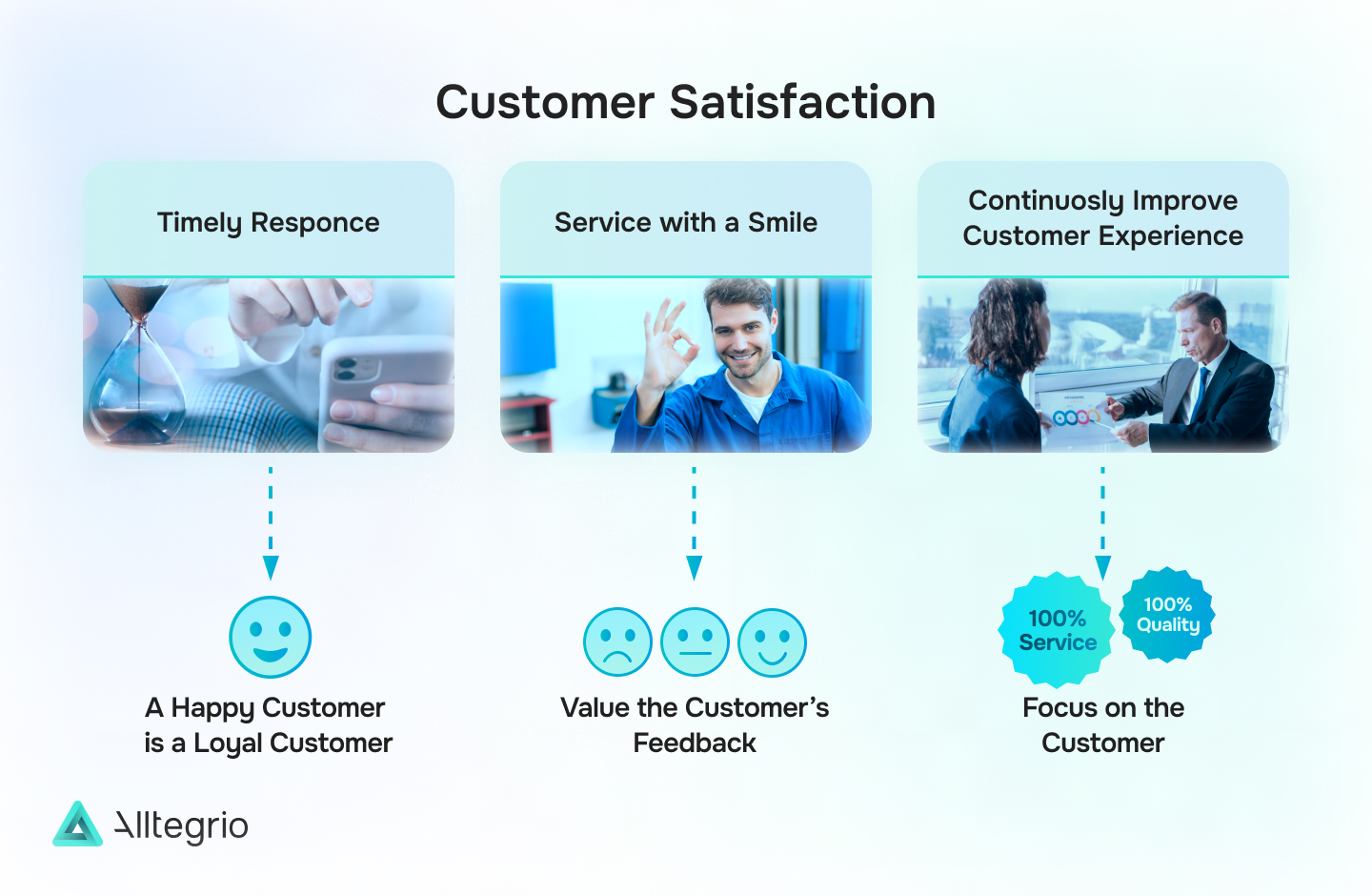
Another important way of reducing churn is through continuous improvement of products and services with the involvement of customer feedback. Where feedback is collected, organizations must make sure they actually listen and act on what customers have to say. This might mean regular feature updates, enhancements in service delivery, or even new product introductions that meet customer expectations. It also fosters deeper connections and a sense of loyalty toward the brand by customers when they feel that their voices are truly heard and acted upon. This will further lead to reduced churn and a stronger customer relationship.
Investing in customer churn AI prediction is helpful to a variety of businesses, including but not limited to:
For example, service providers can analyze usage patterns to identify at-risk customers and proactively reach out with personalized retention offers. Ultimately, you will foster a stronger relationship with your clientele.
Moreover, analytics qqand forecasting can also be a powerful tool for uncovering trends and patterns that are not otherwise intuitive. In the case of retailers, for example, it means the ability to understand not only which customers are likely to churn but what drives customer loyalty.
Segmentation based on the customers’ buying habits and preference enables businesses to craft focused marketing campaigns that appeal to certain demographics, increasing chances of more purchases. You can check out this case study to see how generative AI implementation can enhance marketing on multiple levels.
In the financial industry, the analysis of churn data will reveal a lot about the level of satisfaction of their customers. This helps institutions work out areas where their services can be improved before such pain points trigger an exodus.
All in all, the power of data analytics and forecasting is immense for every industry, from sports injury prediction to preventing bank security breaches. In terms of customer churn management, this AI application is invaluable for growing your revenue over time.